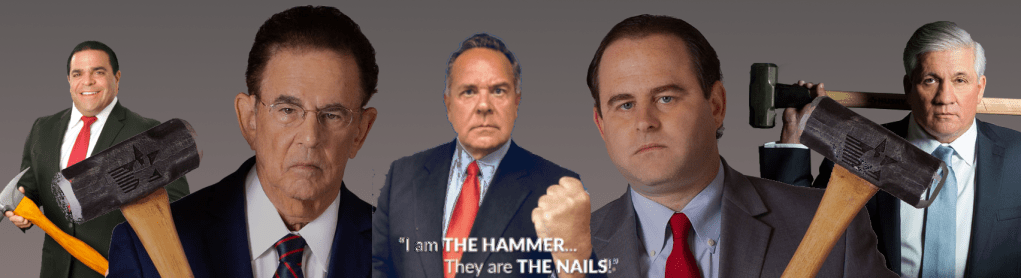
Recently, I was driving through southern Indiana, and I saw a fairly bewildering sign. Unfortunately, since I
was driving, I was not able to get a photo of it, but it was similar to this one:
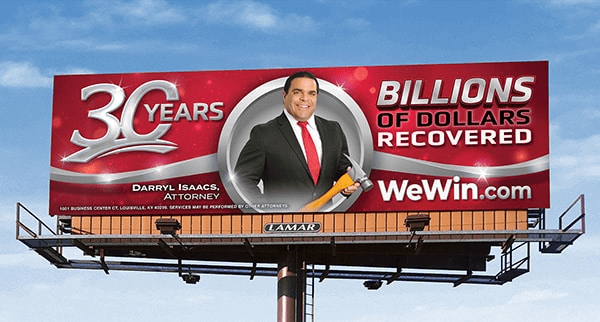
It was not that exceptional. Personal injury lawyers advertise on billboards all the time. Darryl Isaacs, the lawyer in question, advertises pretty widely across Indiana and a few neighboring states to build his business, and tha tmakes sense, but I thought that the image of him was strange.
In the image, Isaacs is holding an oversized carpenter’s hammer. There is nothing in the image that explicitly identifies him with the hammer. But I think that the hammer conveys a lot of information.

Looking at this image, I feel like one instinctively feels that this person is a lawyer. Indeed, as the header image shows, the hammer has become intimately linked with the legal profession. Many lawyers use hammers as symbols, and in this case, the hammer is the only thing identifying the bearer as a lawyer. There is an emergence of a “legal hammer”.
Historically, the “legal hammer” would be the gavel, a tool with a somewhat obscure origin, but according to an article it may have an origin in Freemasonry, and before that, in actual stonemason work. Players of the medieval-themed video game Crusader Kings 2 may also be familiar with the concept of “gavelkind”, which involves the division of land between sons, and other sources claim may be related. I am not a Mason but I have read several documents and sources relevant to Freemasonry, and in my reading it’s fairly common for esoteric organizations to adopt fairly obscure symbolism and etymology, so it seems plausible to me that the term “gavel” could start being used for the hammer.
According to the same article, the gavel was used first in US Senate meetings, and from there it was adopted by judges and auctioneers. The actual US senate gavel does not have a handle, and is quite ornate.
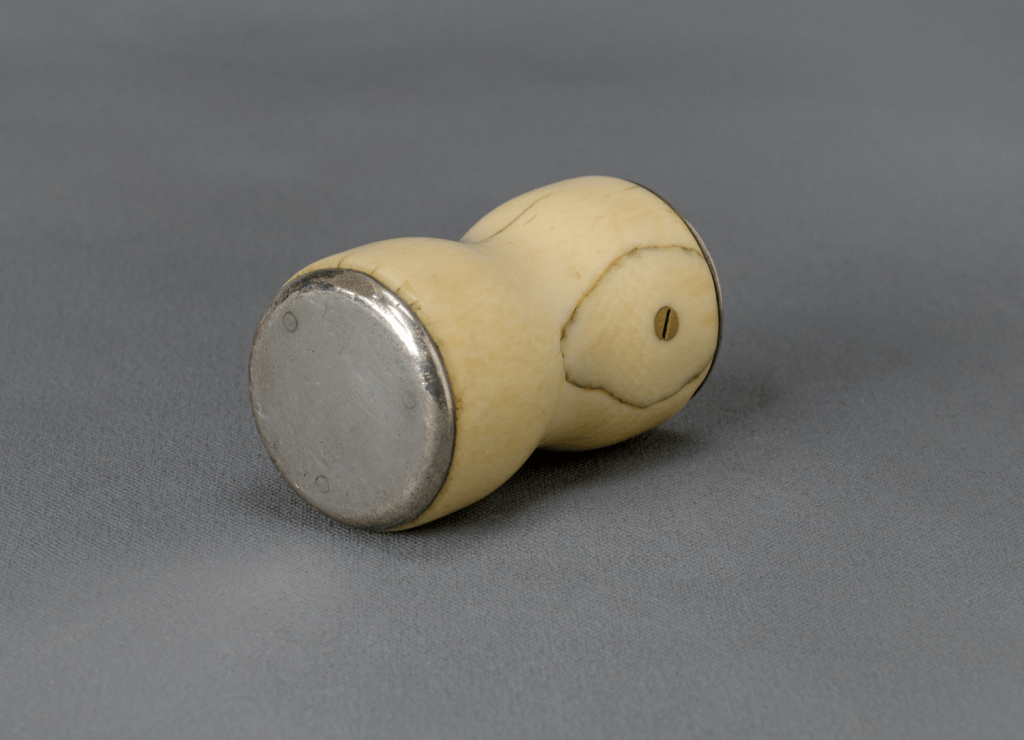
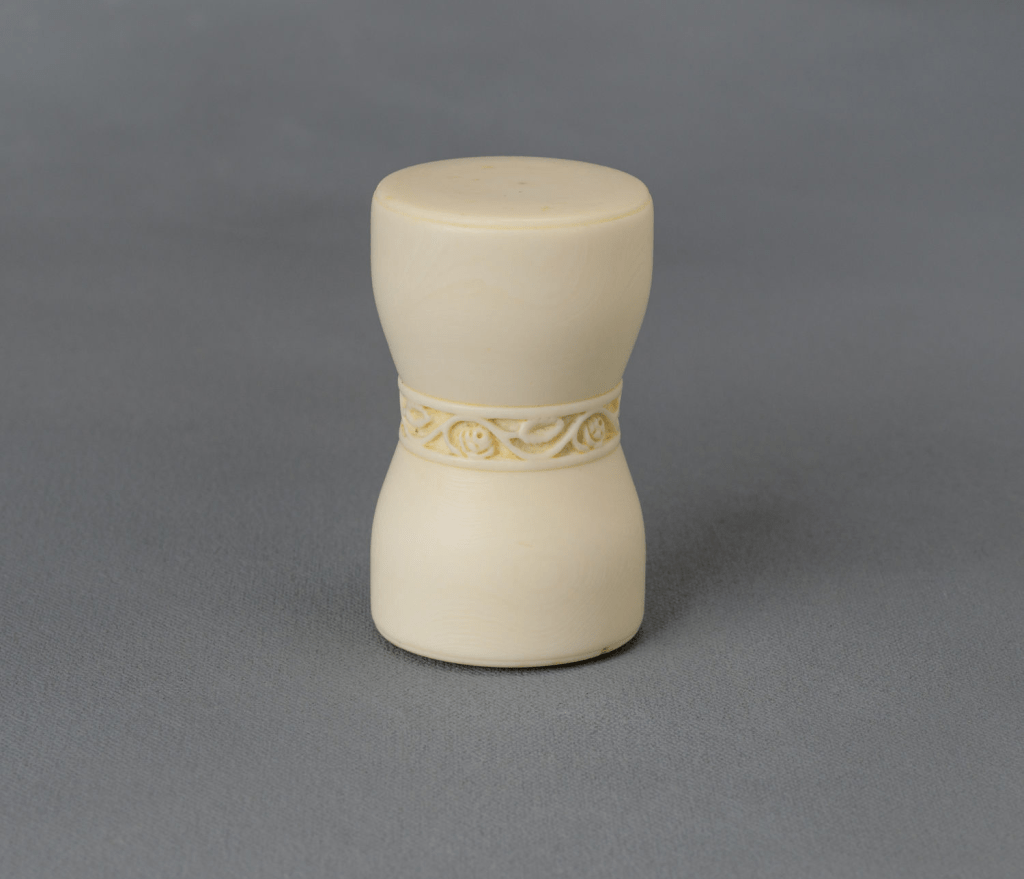
The familiar judge’s gavel, with a handle and a mallet-type head, is seen in courtrooms. I have seen different variations of the legal gavel, but they tend to have the same familiar shape. The use of the legal gavel is not universal by American judges. They have also been used in Poland, the Philippines, South Korea, China, and Mongolia, as well as international courts and institutions (source).

The use of the gavel is mostly to signal attention and provide finality. Everyone who has watched a courtroom drama has seen video of a judge slamming a gavel down repeatedly, yelling “order” or something similar. The gavel has also attracted broader symbolism, such as the “Golden Gavel” awards that Toastmasters presents, or as a symbol of authority in government or the private sector.
In terms of attorneys, the gavel does appear in some law-related advertising. Looking at advertising, they are not nearly as popular as scales of justice, but do seem to be used as recognizable symbols of the legal profession. Interestingly, I actually find more advertisements that are advertising their advertising services to lawyers using gavels as a symbol. I would not be surprised to learn that lawyers find using a gavel in an advertisement to be rather obnoxious.
This brings us to the question of other types of hammer in legal advertising. I think that the biggest factor in using the hammer as a symbol is probably the need for lawyers to have a gimmick. Law, as a profession, is generally not especially exciting and the need for legal services is usually difficult to predict, especially for ordinary people who only engage lawyers when they are injured, in legal trouble, or getting a divorce. Because of this, legal service advertising should either be everywhere, or very memorable. Because of this, you see lots of rather unusual ads for legal services.
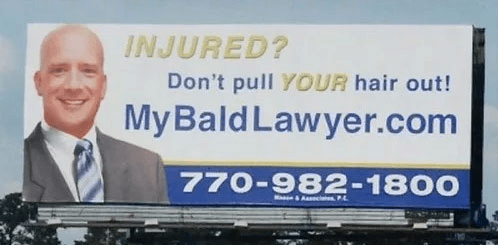
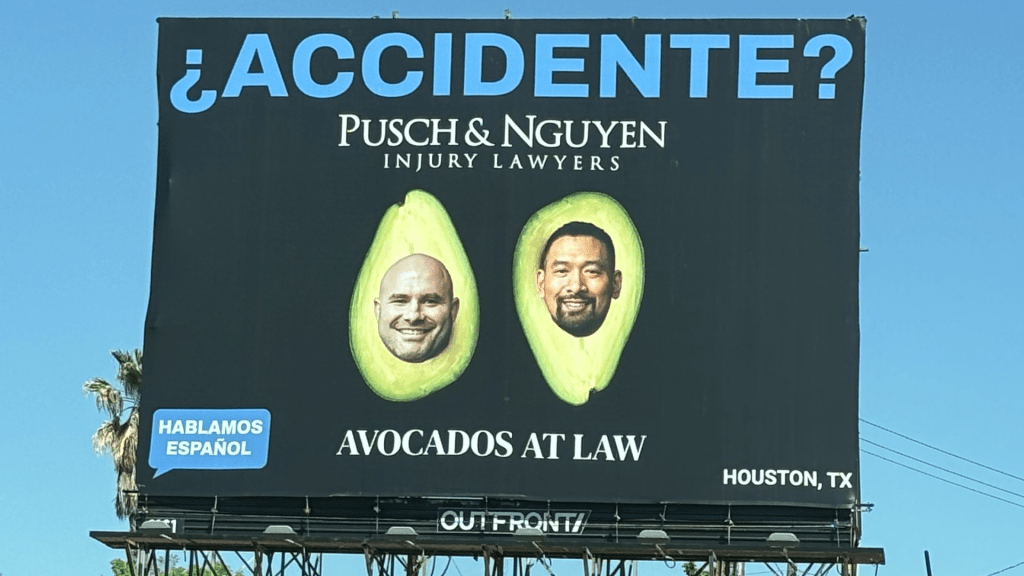
This trend of aggressive advertising can also be found in television ads. I believe that the use of the hammer is due to the convergence of these factors, and it is a very common symbol of the legal profession. From my research, which has been hampered by the fact that I am trying to investigate advertising, it seems like one of the first lawyers to adopt this strategy was Lowell “The Hammer” Stanley. I found a TV ad from as early as 2006, possibly earlier, that showcases him using that nickname on on YouTube.
The nickname “The Hammer” is known. Charles “The Hammer” Martel comes to mind, who was a ruler of France in the early Medieval period. Putting in “Hammer (nickname)” on Wikipedia provides a list of people with that nickname, if one is curious. One can imagine why: it implies forcefulness, which is a desirable quality in many professions, including law. This property is invoked by Stanley in several of his ads and it appears that he was not using “the hammer” in his advertising at least in the mid 90s, but more on that later.
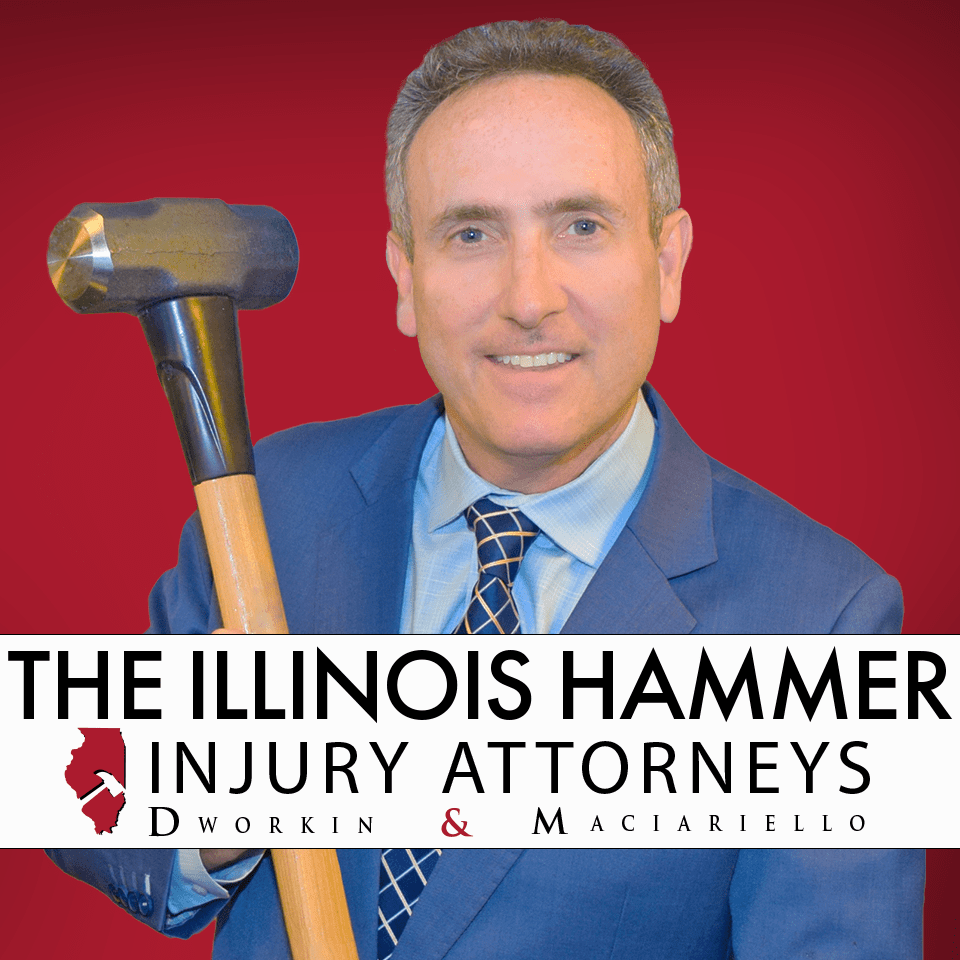
Stanley is active in Virginia, but other states have their own hammers beyond Virginia and Indiana. Illinois has the appropriately-named “Illinois Hammer” injury lawyers. In Canada, there is Hammer Injury Law, run by a Mr. Mallett (!). There are Hammer-themed lawyers all across North America, and apparently they don’t always get along get along.
In the case of Darryl Isaacs, the transition to the carpenter’s hammer can probably be chocked up to his Superbowl ads. Looking at the ads, he uses a variety of hammers, including the sledgehammer that is more common in lawyerly symbolism, but he also makes heavy use of carpenter hammers, such as the fire-breathing dragon that he rides in his 2018 ad, which breathes a carpenter’s-hammer-shaped fireball (here). It’s not high art, but it sure is memorable.
In investigating this, I find myself wondering—who started it?
Stanley’s ad took place in 2006 or earlier. I found an ad claiming to be from 1999 where he uses the name and another supposedly from 1998 but I am not sure how to validate the dates. He also does not use a hammer in these advertisements directly, although the 1998 advertisement includes an animation of a hammer striking something and shattering it.
To contrast, Isaacs was using “Heavy Hitter” branding in 2008, which indicates that he was not the first to adopt the hammer name. Similarly, the Illinois Hammer company was only registered in 2003, and has only used the alias “Hammer” recently, according to corporate records.
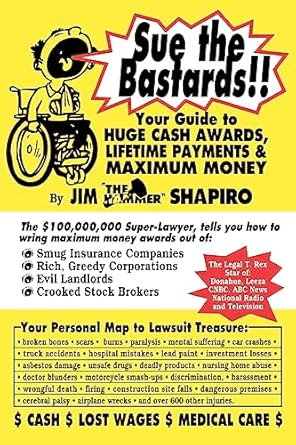
On the other hand, Jim “the Hammer” Shapiro (now no longer practicing law) was using the nickname in 1996. Interestingly, the second advertisement in the linked compilation has the exact same hammer animation that would be used by Darryl Isaacs in 1998, which leads me to believe that Isaacs was copying his “hammer” gimmick from Shapiro. Was Shapiro the originator?
I suspect that he was not. There were, obviously, some lawyers who happened to have the legal last name “Hammer” and according to Wikipedia, the law professor Richard Helmholz is known as “The Hammer”… but I haven’t been able to find any evidence that this is the case at all, so that might not be correct.
But, looking further into the past, there were likely even more lawyers known as “Hammer”. In the 19th century and early 20th century, regulations on legal advertising were limited and many professions that are now characterized by their serious demeanor and rules were treated more as comedy. Recently, many people have been made aware of Painless Parker’s Dental Circus as an internet meme, but there were other major stunts in what are now serious careers, like the electrocution of animals in the battle between AC and DC electrical technology, or the public demonstrations of technologies like anesthesia or new surgical techniques.
At the same time, traveling lawyers and people who “read law” instead of going to law school were more common in the 19th Century, and many of these people had questionable reputations and interesting lives. It would not surprise me if some country lawyer in the sparsely-settled American West went by “the Hammer”—maybe due to a reputation for fanning the hammer on his revolver or for working with a hammer in a trade.
Still, as far as I can find, Jim Shapiro was probably the start of the trend of personal injury lawyers using the hammer as a symbol. With more and more regulations being passed to limit advertisements for legal services over time, it is possible that the bombastic Superbowl ads of the past will disappear. But it seems to me like that would not necessarily stop lawyers from using the hammer, be it a sledgehammer or a claw hammer, as a symbol of their profession.
This association is already present in popular culture. The 2023 film The Hammer stars a traveling judge. And there are so many ads of lawyers holding hammers, even ones who are not strongly associated with hammers in the way that the people discussed are. I believe that this constitutes a very torturous form of skeuomorphism, where the symbol of the hammer, once necessary for ritualistic purposes, has been morphed into a symbol of the legal profession. It is interesting how it has come full circle, with the hammers first shrinking from masonry hammers into small decorative wooden gavels, and then growing again into large sledgehammers that probably could be used on masonry in some bizarre sort of recurrence, even as they remain symbolic.
Taken to the extreme, one could imagine that in the far future, legal services could be symbolized, not by the scales of justice, but by a claw hammer.
I have not received financial compensation from any mentioned party and I have no involvement with any of them. I do not recommend using these services, and do not recommend not using them, and do not know anything about how they operate as lawyers.
 J. E. Landau
Leave a comment