Have you ever thought about the problems with doing business with an alien?
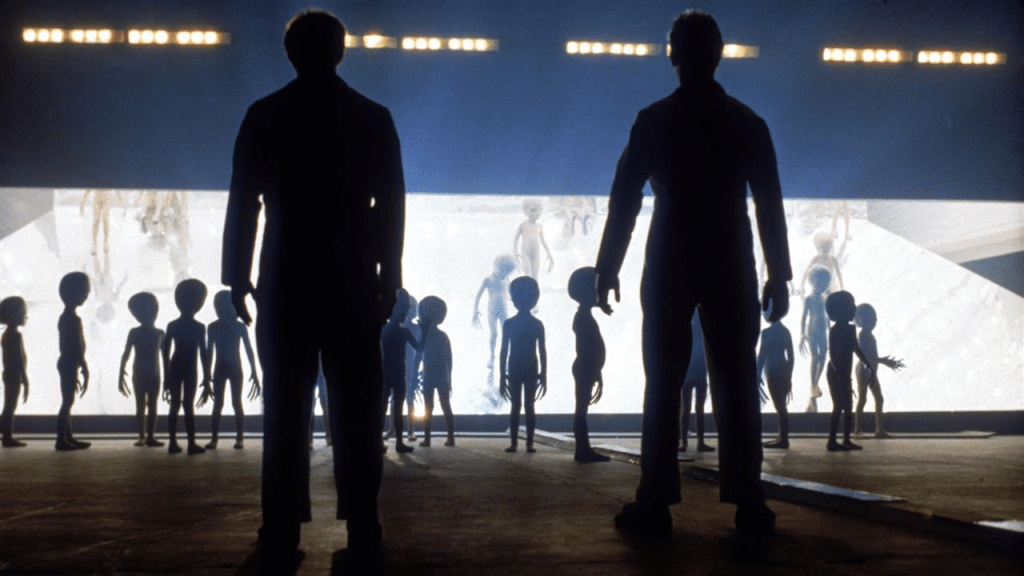
A friend of mine recently watched the sequel to Zootopia, and he pointed out to me that the economics of Zootopia have to be very strange indeed. The movie is about animal people who all live together in one large metropolis, that caters to their needs about different species. The movies are about the divisions between the animal people, who are often in political conflict with one another.
But, here’s a question: does a hamster in Zootopia make the same salary as a lion?
This might seem like a strange question, but consider this: the hamster consumes far less food, water, and space than the lion. If the lion is making a livable wage, then the equivalent hamster in the same position has enormously more disposable income after subtracting all essential living expenses, which could leading to escalating wealth disparities. There are, of course, means of solving this. If hamsters in Zootopia have shorter lives, then an aggressive estate tax could be used to prevent the accumulation of wealth across generations. One could also try to reduce the flow of currency between communities, and a lot of jobs would be separate due to their size differences (for example, work in construction and food service), but in an internet-connected world many goods are digital and obviously in any capitalist society the hamsters could invest in the same financial instruments as the lions.
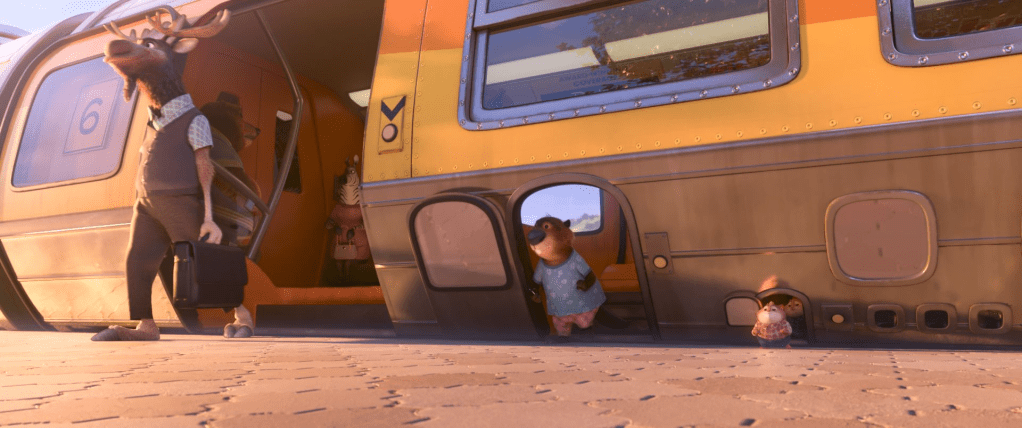
Zootopia is a kids movie, but I think that these issues bear further consideration. Almost the exact same problem is posed by The Age of Em by Robin Hanson, which proposes that in the future, society’s economic output will be dominated by emulated human consciousnesses, or “ems”. The book proposes a lot of interesting questions about how a society with this structure would work, but it’s important to note that in his proposed world, the ems massively outnumber everyone else, and have basically zero recurring expenses. This allows them to accumulate basically all the wealth in the world and completely devalues all labor, which may be bad or good.
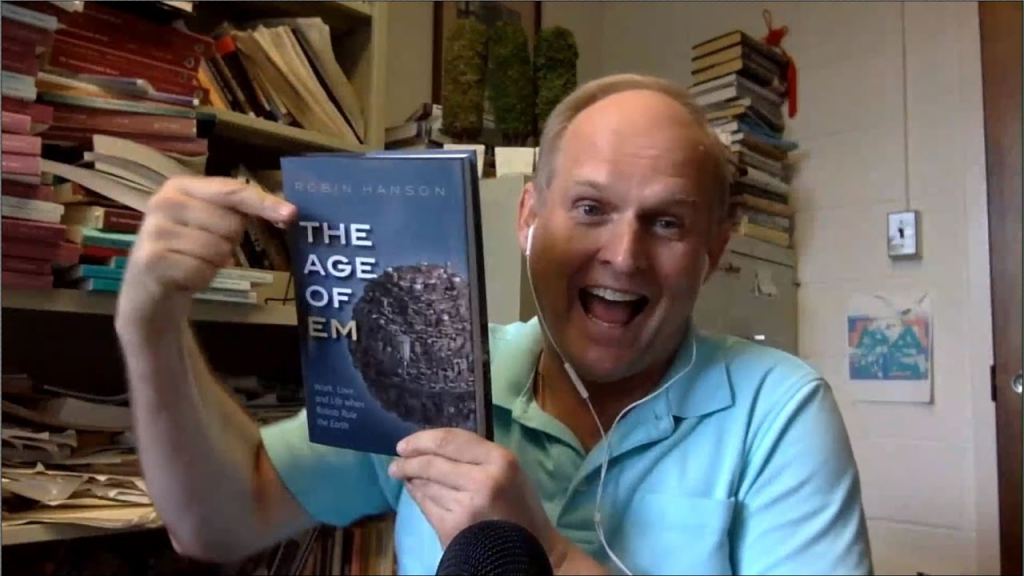
A similar vision has been proposed by tech companies, which propose a society where all things are done by artificial intelligence. If artificial general intelligence (AGI) is able to do the same job as a human and its ongoing expenses (electricity, hardware maintenance, and wages) are lower, then this could lead to AGIs accumulating an enormous amount of wealth. Of course, it is also possible that the AGIs would not be paid, which is probably not ethical but which would be a highly effective way for the CEOs of tech companies to accumulate incredible wealth. In a society where AGIs and human beings live side by side, it is possible that AGIs could be totally economically dominated by humans, or the other way around, but it seems to me that if AGIs are economically competitive to humans, there would be few of them built for financial reasons, because there would be little financial incentive from either party to do so (although AGIs might want to live with their peers).
An interesting case of a mixed-species economy depicted in fiction is the galactic society shown in Vernor Vinge’s A Fire Upon a Deep, which is a real classic with a lot of interesting ideas. In that society, maximum intelligence depends on your distance from the galactic core, and Earth is located in one of the lower-intelligence areas, called the Slow Zone. The story mostly takes place at an intermediate distance, where FTL travel and communication are possible in a region called the Beyond, but it has godlike beings living beyond that in a space called the Transcend.
Civilizations from everywhere between the edge of the Slow Zone to the Transcend are able to participate in a shared economy by using communication credits as the general shared currency. This makes some degree of sense, since they are useful to everyone and with a long chain of civilizations relaying messages all around the galaxy, it is possible to spend them anywhere. But this is definitely not equal. Some civilizations barely use any communication credits, allowing them to hoard wealth, and entities from the transcend are hyperintelligent and generally able to exchange massive amounts of goods and services for communication credits, giving them a huge amount of pull. This system works because things are relatively equal at varying distances, but things get complicated when moving between them.
Another interesting example would be the archetypal vampire. The vampire is depicted as wealthy and living in an enormous mansion, which is likely due to the vampire’s association with various groups (for example, the vampire can be a stand in for wealthy people or aristocrats) but from a purely mechanistic analysis it also makes sense that vampires would be extraordinarily wealthy. They are immortal, which means that they can afford to invest soon after they are bitten, and after a few centuries live in luxury off of accumulated compound interest, in addition to whatever economic advantages their unlife gets them (the money-saving applications of powers such as being able to turn into a swarm of bats, control the minds of others, etc. are left for the reader to consider). Of course, for vampires living paycheck-to-paycheck and neck-to-neck, it may be impossible to ever accumulate much wealth.

This same disparity can be seen with a lot of fantasy settings. Long-lived species tend to be much wealthier than shorter-lived ones. In Tolkien, this is likely because of their mythic inspiration, but it also makes sense to me. It would likely be much easier to invest over a thousand years, although in Lord of the Rings, elves would likely have much slower business cycles. In the average D&D campaign, however, there’s no reason why elves shouldn’t own the whole world. Much of the real-world’s wealth and influence is controlled by groups who were historically influential, and this only changed due to cataclysmic events (sometimes caused by the collection of so much wealth). With long-lived individuals, these wealthy families could be instead a single wealthy person, who accumulates enormous amounts of money over generations of lives for the lesser species.
In a fantasy setting, it might make sense to have some sort of “longevity tax” to work as an equivalent to an estate tax. This is obviously unfair, but could help prevent major disparities.
Returning to the idea of AGIs, a lot of pieces of fiction have dealt with cyborgs, mutants, or engineered people as an oppressed underclass artificially created by overlords. In many of these settings, the overlord species fears or is indifferent to the underclass, and so keeps it in isolation, cutting it off from much of the economic activity of that society. This can be seen with Blade Runner’s replicants, who are used for undesirable slave labor, or with the status of artificial intelligence in the recent book Dead Space by Kali Wallace.
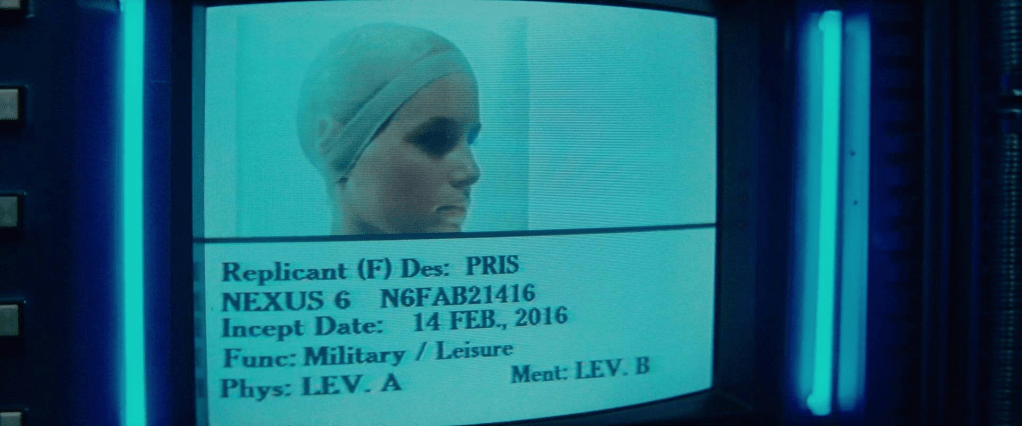
In Blade Runner, the replicants work together to survive in a world that is hostile to them, but they are not allowed to own property. They have been engineered with a short lifespan to make them less of a threat, but this does not stop them from feeling extremely negatively about their conditions. In Dead Space, AIs are rare and kept under tight control, because it is feared that their escape could destroy humanity. Despite this, they have good relationships with the people that work with them and are fairly empathetic.
In both of these case, the status of the other species is similar to real-life slaves or undesirables. They act as a force multiplier for the people who already wield economic power and can be used for dangerous work.
One thing that I haven’t seen done, but which might be interesting, would be seeing a society where a sudden species diversification is forced on the population. For example, if people are turned into pulp sci-fi mutants, or if hostile aliens modify the population like in All Tomorrows, or perhaps two species are forced together because of a generation-ship crash landing or some sort of hyperspace accident.
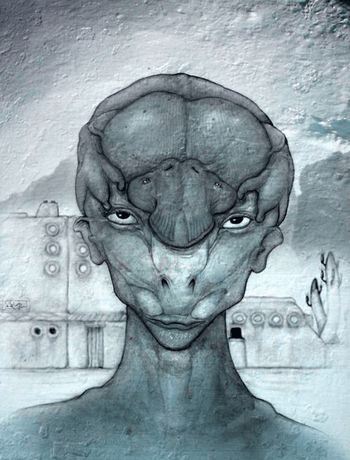
In this case, it would be interesting to explore the changes in wealth and economics that take place in this society. Maybe one species would dominate, or roles would be common with one species and not another. There are no significant distances in suitability to work in nearly any jobs between ethnic groups, but it is common for ethnic groups to end up controlling some industries in some areas, so the situation could be somewhat similar to this. Perhaps every human works as a mechanic. Of course, there are potential pitfalls. In real life, there are ethnic and cultural stereotypes related to professions, and having one species that works as bankers and lawyers, for example, could lead to one being embroiled in questions about Jewish stereotypes.
It might also be interesting to explore the implications of a society where more and more people are becoming vampires or zombies or another type of alien being. I read a short story called The Girl-Thing Who Went Out for Sushi by Pat Cadigan, which is about a society where some people “go out for sushi” and become jellyfish-like beings, which has major changes for their life and psychology. Because this is a growing phenomenon in the population, it’s controversial and leads to issues in interpersonal relationships and workplaces. Another example might be something like Daybreakers where vampires have become the vast majority of society, but covering the period leading up to the vampire takeover. I think that exploring these kinds of social changes could be a great way to put new twists on old things.
Another thing I don’t see that much in fiction, but which the aforementioned A Fire Upon the Deep addresses, is societies with a widely varying set of body plans. In A Fire Upon the Deep, alien species include wolflike aliens that form small shared minds and can do complex tasks by coordinating their limited ability to manipulate things with their jaws. There are also the skroderiders, who are sessile aliens that require a mechanical platform (the “skrode”) to travel around and manipulate their environment. This has led to the skroderiders mostly working in fields that do not involve danger or manual labor and they have become well-known merchants throughout their portion of the galaxy.
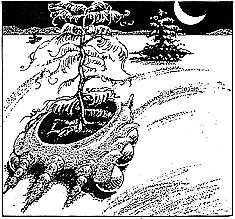
Stephen Baxter’s Xeelee Sequence series has a pretty wide variety of alien bodies as well, although the societies tend to only interact in violent ways. The Qax are a powerful merchant species made out of intelligent vortex patterns, and they can exist in many different environments. They rose to power by exploiting their natural ability to refine some kinds of chemicals, but at the time of the story are mostly interested in exploiting other species to become even more wealthy. The Xeelee Sequence also has the Xeelee, who are made of quantum vacuum fluctuations, the Photino Birds, made of dark matter, and the Silver Ghosts, who are floating silver spheres.

Unfortunately, the Xeelee Sequence is not a setting where these species peacefully coexist or generally even interact with each other face-to-face, but it would be interesting to see similar ideas in a setting where species live and work together. What would working with an intelligent gas cloud be like? Or trying to buy something from a store run by a being that exists only as the self-sustaining domino effect of wares falling over, or something more strange. I feel like this is something that has been explored a bit in sillier sci-fi settings like Doctor Who or Futurama, but it would be interesting to see it in something with a serious tone and perhaps hard-sf stylings.
There are also other considerations. What about time travelers? A civilization that does not, itself time travel but which has dealings with time traveling individuals or societies could end up having to adopt very strange mechanisms to deal with them. In S. A. Swann’s Hostile Takeover trilogy, the usual policy with time travelers is to “shoot on sight”, to make sure the timeline doesn’t get messed up, but if the timeline is fixed and can’t be altered by time travelers, you might have more interesting configurations. Like, for example, time travelers paying off future debts in the past. If time travel is only possible for some groups, they might be banned from the stock market (to prevent insider trading) and have to operate their own banks to account for the problems of time travelers. No doubt there would be a lot of interesting problems.
It might also be interesting to think about having hive minds in a society mostly composed of individuals. How would they interact with others? How would they be treated for legal and financial purposes? What if people claim to be hive minds, but aren’t? Or claim not to be hive minds, but are
And there are more questions: How do they handle duplication of whole people? How are copies prosecuted? What about species with genetic memory? Or partially shared consciousness?
In my mind, one of the strongest attributes of science fiction is approaching these complex and bizarre questions in a way that regular fiction cannot. I think that it could be very exciting to explore these issues.
 J. E. Landau
Leave a comment