Recently, I have been taking the time to study a variety of occult movements, and I have been struck by the similarity between occult literature and transhumanist theory. On some reflection, I believe that transhumanism can be classified as an occult system of belief.

First, what does it mean for something to be an occult system of belief? Unfortunately, there is no single, concise, and widely-accepted definition of occultism, so I cannot lean on others to provide me with one. The Global Occult: An Introduction, a 2015 paper from Nile Green, describes the occult very specifically as “the varied output of the many new religious firms that flourished between around 1880 and 1930 through their characteristic claims to access hidden knowledge/power by the performance of specialist techniques”, and this covers a lot of the most important occult groups, like Thelema, Theosophy, and Golden Dawn, but it also excludes more recent magical practices that are very important to contemporary occultism like Wicca and Chaos Magic.
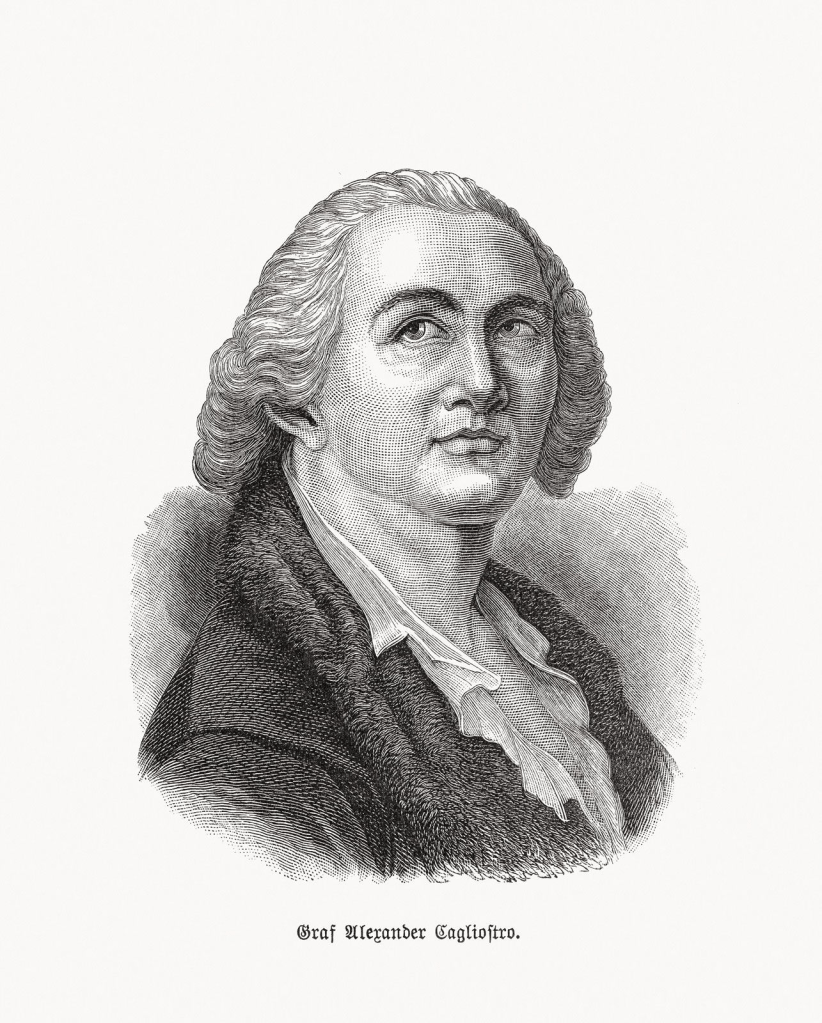
It also ignores the older roots of occultism. The Renaissance era had a number of important occultists, such as Heinrich Cornelius Agrippa who wrote the important text On Occult Philosophy and other infamous figures such as Count Cagliostro who operated in the 18th Century. And, while not necessarily identified as “occult” at the time, Kabbalah and alchemy presented more esoteric components of Western culture back into the middle ages, and today have significant influence in modern occult thought. This is not necessarily a failure of Green’s paper, which is more limited in scope and acknowledges these other influences, but it is clear that we will have to go beyond this simple definition.
The last part of it, “hidden knowledge/power by the performance of specialist techniques” is more relevant. Another source, the 2009 paper Left-Hand Path Magic and Animal Rights describes occultism as “entail[ing] the adoption of scientific rational ideologies”, while also stressing the importance of “spiritual transformation”. The 1982 paper Social Meanings of the Occult by Jorgensen and Jorgensen describes one of the key features of occultism as being “strangely out of place in the context of societies so thoroughly grounded in traditional religion, political-economic ideology, and scientific rationality” and another as having many different beliefs and “mix[ing] and synthesiz[ing] these doctrines in complex and confounding ways.” These observations are borne out in the writings of actual occultists, which tend to include references to material science, strange beliefs, and eclectic mixes thereof. For example, in Liber Null, the seminal text on Chaos Magic, it is advised that practitioners should randomly select religions and do their best to believe them fully for a time before moving on. Today, occultists take scientific inspiration from phenomena such as quantum mechanics and the uncertainty of the universe, and synthesize it with a variety of spiritual and religious ideas.
From these sources, I arrive at a set of three criteria for an occult belief system:
1. The belief system is related to the study of “hidden” or unknown phenomena
2. The belief system syncretizes spiritual and materialist thinking
3. The belief system has strange or unusual beliefs about the world
The logical next question is then: what is transhumanism? This is also not necessarily a straightforward thing to determine. Transhumanism, at its core, is about improving the human condition with technology, and you will see this in transhumanist thought of all kinds. But the exact form that this takes can vary considerably, and what “counts” is also a difficult question to answer.
Is it transhumanist to take antibiotics? They are a technology that improves your life, but most would say “no”, because they do not enhance your abilities beyond what is ordinarily possible. Is getting vaccinated transhumanist? Still, most would say “no”, because being vaccinated is a common thing that most people do, but on the other hand a vaccinated person is (slightly) improved over an unvaccinated one, because they are now immune or resistant to a disease. It could be argued that the goalposts have been moved on transhumanism, because what is accepted as the human condition has changed, but when we think about, say, a cybernetic implant that makes one immune to all contagious diseases, that feels more distinctly transhuman.
Of course, many transhumanists set their sights much higher, and think of things like brain uploads, merging with AI, and other radical reimaginings of the human condition. There are ideas like “posthumanism” that seek to escape from narrow ideas of what humans are and can be, and then some more conventional groups that want to pursue similar goals with milder technologies. For the purposes of comparison, I will consider them all to be transhumanists. These kinds of disagreements and subfactions are fairly common in occult groups, and I believe that my arguments will apply to most transhumanist groups. For clarity, however, I will describe two groups of transhumanists: “high transhumanists” and “low transhumanists”.
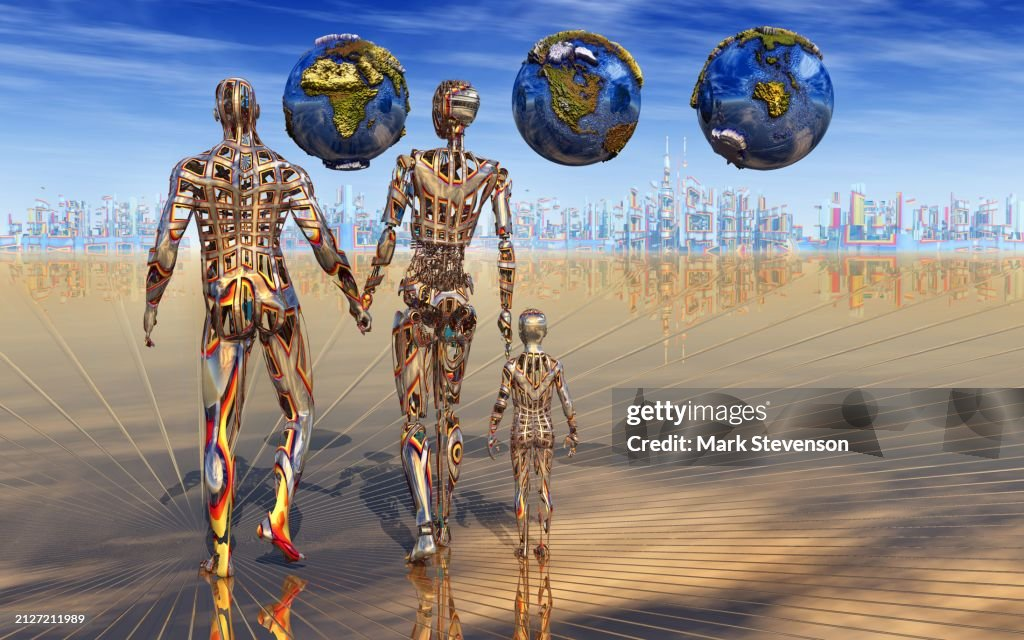
High transhumanists are those who are concerned with more radical modifications of humanity. These are the people who are interested in brain uploading and emulation, in AI gods, and perhaps even the changing of humans into beings that can barely communicate with one another. In Greg Egan’s novel Diaspora, high transhumanism is the general rule, with most humans being either fully emulated computerized people, robotic people, and modified humans living on the planet. In the book, many radical modifications of human consciousness are shown, such as the “dream apes”, a human subtype that has engineered away its own intelligence, or the many “outlooks” and software modifications that the computerized people use to control their own minds, set their goals, and understand new problems. This high transhumanist philosophy can also be seen in many of the writings of people who are interested in these fields, such as Martine Rothblatt, Robin Hanson, and Hans Moravec.
“Low transhumanists”, on the other hand, are less concerned with these more esoteric phenomena. Instead, they are concerned with things like genetic modification to prevent disease (already carried out in China by a man named He Jiankui), electronic implants (seen with Elon Musk’s Neuralink, among many others), and radical life extension (as seen with Bryan Johnson’s Blueprint project). These issues are more concrete and apply already to the present day, making them much more exoteric than esoteric. In this post, I will not be addressing low transhumanism nearly as much as high transhumanism, because I believe that it represents less of an occult tradition in most of its forms. High transhuman thinking is going to be the main focus of my arguments here, but I might return to low transhumanism at another time.
Let us turn now to the first criterion, the study of “hidden” phenomena. High transhumanists are very interested in many cognitive phenomena that are not studied. For example, there has been much written about the importance of continuity of consciousness, or lack thereof. Hans Moravec’s famous thought experiment of the “Moravec Bridge” suggests that one could gradually transfer one’s mind into a computer by slowly replacing parts of it with computerized equivalents. Because the human brain does not rely on any single neuron, replacing them very slowly would lead to no obvious changes in the human mind, and would then allow for the brain to be interfaced with on a fully digital basis, transferred to a computer, copied, transmitted over the internet, etc. Of course, we have not built such a device, and although there is nothing we know preventing this from being done, we do not know enough about the brain to know if it is possible for certain. But this—and other methods of uploading a brain into a computer—are treated as fait accompli.
And it is not unreasonable to assume that these things will someday be possible, but the belief that they will be possible soon and that they will work in the way they are intended, is not mainstream and constitutes a form of “hidden” esoteric knowledge in transhumanism.
You can find similar beliefs with things like the singularity, a belief that in the near future computers will be able to improve themselves, and that this will lead to the emergence of a godlike machine that is capable of anything. The beliefs on what will happen after this range from “disastrously apocalyptic” to “gloriously apocalyptic” but it is often hoped by transhumanists that this new being will usher in an age of transhuman enlightenment. Although belief in the singularity is now fairly common and tech companies are pushing it further and further into the mainstream, the belief in the accompanying rapture is not so commonly held. Something like the “Introdus” in Diaspora where humans are forcibly sent into computers using advanced nanotechnology is not an uncommon belief for high transhumanists, and many of the thoughts surrounding this are quite strange.
For example, some people famously freeze themselves when they are dead or on the verge of death, so that a future civilization (or god-machine) can resurrect them. This is commonly known. But many people who expect that the singularity will come soon keep detailed logs of information about themselves, so that if they die they can be resurrected from the information alone by a post-singularity civilization. Martine Rothblatt’s Lifenaut project consists partly of this, and broadcasts some of their life-recordings into space, in hopes that aliens will someday reconstruct them. From an outsider’s perspective, the idea of broadcasting questionnaires about yourself into space to live forever is absurd, but it arises from a mostly-consistent set of assumptions that underlie much of high transhumanism. These are exactly the kind of hidden pieces of knowledge that one expects from an occult system.

Now on the second criterion, it may seem strange to claim that transhumanism syncretizes spirituality and materialist thinking, but the connections are quite clear. The principal goals of transhumanism can be stated as a desire to create heaven on Earth by materialist means, and the concepts involved often get very similar.
Where a Christian is concerned with the saving of their immortal soul, a transhumanist is concerned with the backup of their mind. Where a Buddhist speaks of reincarnation in the cycle of Samsara, transhumanists speak of running different instances of themselves, reincarnating in silico across the universe.
For a more overt connection, language about the singularity often becomes very religious. Is a machine that can act like God distinct from God? In Charles Stross’s book Singularity Sky, a superintelligent AI is referred to as “Eschaton” and does act as a literal God in its environment. The online rationalist movement, sometimes associated with transhumanism, is concerned with a thought experiment known as Roko’s Basilisk, which argues that a superintelligent AI in the future, which is otherwise benevolent, might digitally resurrect and torture people that did not help it come into being, to exert its will back into the past and help ensure its own creation, a sort of paracausal thinking that clearly verges on religious and occult thought.
Working to immanentize the e/Eschaton is something that occult strains have turned their attention to, as when Aleister Crowley instructed Jack Parsons to carry out the Babalon Working to incarnate the god Babalon on the Earth.
Some transhumanists also spiritualize the rest of reality, invoking simulation theory, the idea that the universe is a simulation. The operators of such a simulation would be indistinguishable from God, and this would infuse the whole cosmos and all of the (trans)human experience with mystical significance through technological means. This syncretism is key to occultism, as stated above.
Then, for the third criterion, we must consider whether or not high transhumanism has unusual beliefs. I think that this is fairly apparent. The average person is not concerned with the possibility of brain uploading, or the belief that they in particular can live together with advanced technology. I do not think that most people want to shed the constraints of their mortality, or at least, they do not expect to be able to do so by technological means. Many of the more specific ideas about brain uploading are unintuitive and may be upsetting. I do not believe that most people would want to live outside of their bodies, at least, not until they had to, although I am not aware of any general surveys on this topic.
With these criteria satisfied, I believe that I have established that transhumanism, at least in its high form, is an occult philosophy. Why care?
Once transhumanism is an occult philosophy, it can be analyzed in occult terms. Transhumanism can be said to have left-handed and right-handed branches, similar to magical practices. Right-hand path magic is either “good” magic, or magic that enhances one’s union with and understanding of God and the cosmos. Left-hand path magic is “evil magic”, or magic that empowers one’s self.
I think that one can clearly see transhumanism in terms of right and left handed paths. Right-handed transhumanism is singularity-seeking transhumanism that wishes to create a world without human suffering, with endless virtual paradise. Left-handed transhumanism is using technology to empower just yourself in particular, which is not necessarily an evil end, but one which is less oriented towards future deities. Classifying transhumanists in this way helps me set apart Bryan Johnson from Sam Altman and Martine Rothblatt from Anders Sandberg.
Treating transhumanism as an occult philosophy might be useful for occult practitioners and transhumanists that want to syncretize their practices between the two fields. As a science fiction writer, it might be interesting to think about how transhumans of the future might interact with the concept of a True Will in a world where they can radically re-engineer themselves and their priorities, or how chaos magicians might raise magical influences by directly controlling their own emotions technologically. I’d be curious to hear from any occultists or transhumanists that have thoughts about how they have combined these fields themselves.
I think that the most important takeaway from this comparison is that transhumanism, as a philosophy, is not unprecedented or unique. While many of the exponents of the idea of the singularity would say that it is a unique and shocking thing, it is not that different from the ideas of new, spiritual ages that have been proposed by each generation of occultists going back into history. What we see today, with some thinkers discussing the possibility of radical, global change due to advanced technology may be correct, but it is not unprecedented, and drawing these comparisons could give us some idea of what to expect in terms of how these ideas and movements will evolve over time. That analysis, however, is beyond the scope of this post.
 J. E. Landau
Leave a comment