Did you know that there is less biomass of human being in the world than there is biomass of virus?
I found this fact a bit unintuitive when I read it, but it does make sense on further consideration. According to a paper released by PNAS, there is about 0.06 gigatons (Gt) of carbon in human beings, or there was in 2018. The population has grown a bit since then.
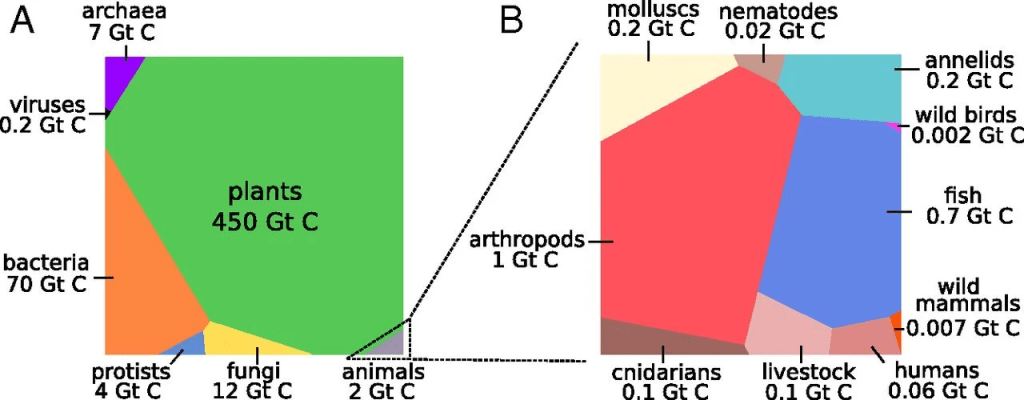
To compare, viruses are credited with 0.2 Gt of carbon, or about three times as much. Even though we can’t see viruses, there are for more of them then there are of us, mostly because they are everywhere. Human beings are relatively specialized as a group, but viruses infect most kinds of living things, including the biggest biomass categories like plants (450 Gt) and bacteria (70 Gt) while animals as a whole are a mere 2 Gt, mostly arthropods and fish.
Don’t worry if those numbers make you feel puny. They are changing.
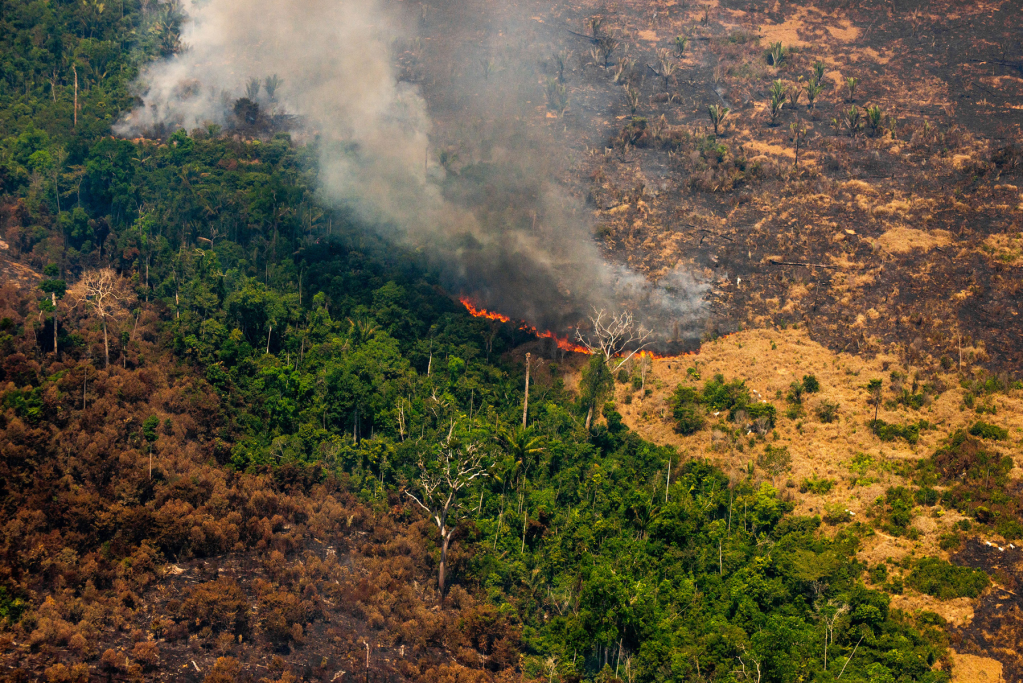
The world biomass of plants is decreasing due to human action, such as deforestation in the Amazon rainforest. According to a recent paper, human actions have led to the release of over a gigaton of carbon from the Amazon per year and more from other sources, something driven in large part by a desire to use the land for cattle grazing. This action, driven by economic and political incentives, removes a billion tons of carbon from the world plant biomass, or about 0.2%, and blows the 0.2 Gt of virus carbon out of the water.
At the same time, this increases the amount of biomass invested in livestock, which is already an order of magnitude greater than the combined biomass of wild birds and mammals. We see similar changes across the ecosystem: living things that are promoted by, parasitize, or coexist comfortably with humans are able to thrive in the current era, the anthropocene, so named because it is the era of geological history in which human beings influence even the slow geological and ecological processes of the world.
From there, it is natural to wonder: what about a world maximally dominated by human influence? I am imagining a city planet, like Coruscant from Star Wars or Trantor from Foundation. On such a planet, the population density would be extremely high in most areas and there would be no natural environments.
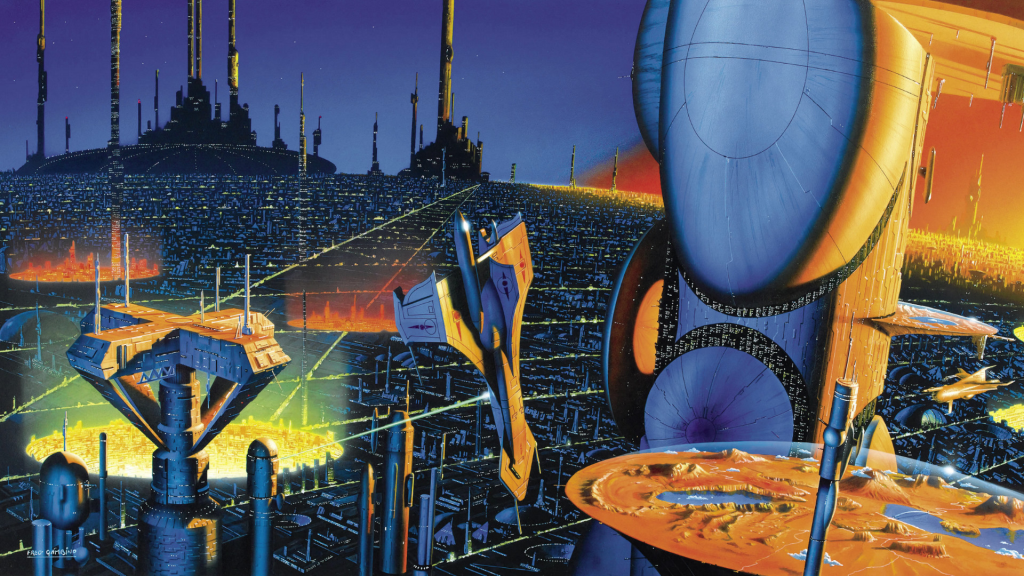
There have been a lot of science fiction discussions about what the structure of such a planet would look like or what the total population count would be, and I’ve seen numbers ranging from the hundreds of billions to the quadrillions depending on how food is produced and (most importantly) where energy comes from. I don’t want to get bogged down in the weeds of those discussions, and instead I think it is best to focus on the relative biomasses of the components.
First, there is the human part of the ecosystem, which we can say is our reference unit, or 1 mass. There might be two hundred billion, or two quadrillion, but the important thing is that we can derive the amounts of each part of the city-planet ecosystem with respect to the number of people.
These human beings will need to eat, of course. If we assume something like the current ratio of meat-to-person that we have today, that would imply that there would be around twice as much livestock biomass as there is human biomass (0.06 Gt human biomass vs. 0.1 Gt livestock biomass today), for a livestock biomass factor of 1.7. But this might not be an accurate assumption. If meat consumption goes from traditional livestock rearing to methods that are more efficient, this number could be reduced. Examining butchery websites seems to indicate that animals have a yield rate of 40%-60% when processed from livestock into meat, which we will assume is about half on average. This means that only about half of the animal’s mass becomes usable meat. With cellular agriculture, it might be possible to recover nearly all of the livestock biomass as food, which would allow for the livestock biomass factor to be reduced to 0.8. And, of course, if the planet’s population largely follows a vegan lifestyle, then that proportion could be as low as 0.
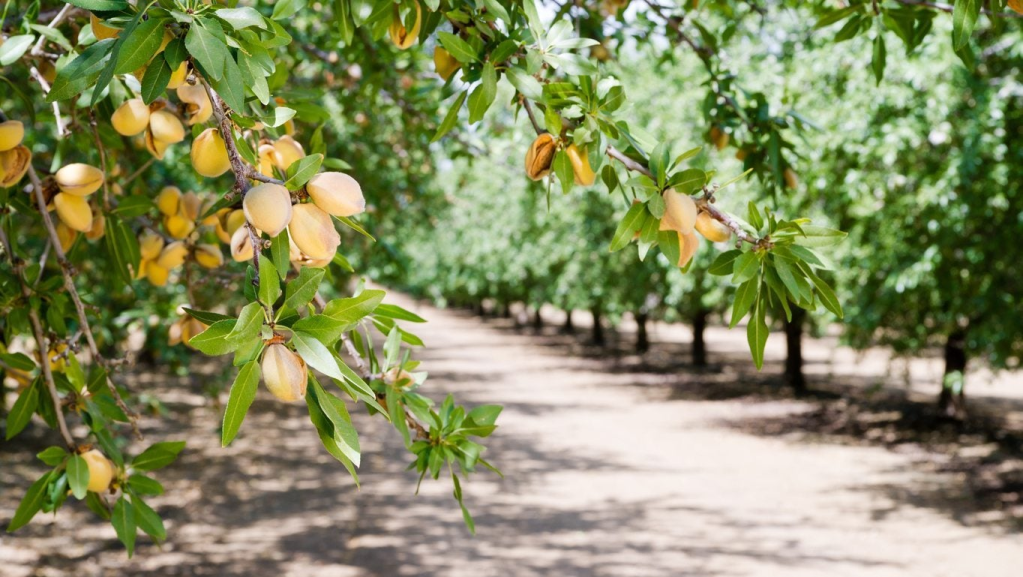
People don’t just eat meat, of course. Human agriculture produced 10 billion tons of crops in 2023, according to a United Nations paper. Some online research doesn’t give precise figures, but it seems like 35-40% of plants is carbon, which would put the biomass of crops at around 3.5 billion tons, or 58 times human biomass. This makes sense, since you generally lose an order of magnitude every time you go up a trophic level. But that is only the yield of the crops. Of course, with cellular agriculture, genetic engineering, and more efficient practices it is possible that you could eliminate much of the surplus part of the plant. On the other hand, it’s hard to say how much of that surplus part is actually surplus. You don’t eat an orange peel, but it’s good to have it there so that the tasty part of the orange gets to you intact, for example. Some plants are also much more biomass efficient than others: compare an almond tree to a potato. One retains far more carbon than the other.
Even beyond the actual waste in the shape of the plant, there is certain biomass that is invested in food that is still growing, and not yet ready to eat. Crops do not spring out of the ground fully formed, and take a significant amount of time to grow. The fact that the figure above is for a year incorporates this information, for the most part, since most crops grow on an annual cycle, but it is important to consider this when looking for optimizations. Additionally, 45% of crops are used for non-eating purposes such as animal feed or biofuel. If we assume that 30% of the average edible plant in this city-planet is edible (a number from thin air, I’m afraid to say) and eliminate the crops grown for biofuel, then we get a ratio of 177.
What other sorts of biomass would there be? It’s possible that a world like this could have fish, but they’d only be for human consumption. Currently, 171 million tons of fish are caught annually from both wild and farm sources. Of those fish, somewhere around 15% of their wet mass is protein and 10% is fat, and protein is about 50% carbon by mass while fat is about 75% carbon by mass, giving a total of around 26 million tons of biomass harvested per year, which is around 1/3 of the human biomass number, or 0.43 (assuming all fish biomass is produced in the most efficient way possible). With more realistic efficiency numbers, it seems likely that the fish biomass ratio would be somewhere around 0.86, to account for keeping sustainable stocks of fish.
What other sources of biomass would make up the ecosystem? There would no doubt be a significant contingent of fungi living off of discarded biomass from other parts of the ecosystem. It’s difficult to estimate the amount of fungal matter directly, but it would likely mostly grow related to the waste from agricultural processes, for industrial purposes, and to be eaten. I believe that a ratio similar to that which we have today between plant biomass and fungal biomass is possible, which according to the paper with the lists of biomasses, would be around 0.03, and compared to humans would be 4.72.
Then, there are arthropods. There would no doubt be a large number of arthropods living on such a world. Most would probably be pests and parasites that live off of humans and their waste. Imagine cockroaches, mosquitoes, bedbugs, and all other kinds of obnoxious creatures. No doubt, pest control would be an ongoing challenge. Rats and mice would also likely be present. Assuming that this would be an ongoing problem, similar today, it is likely that the overall biomass of these species would be negligible. I have had trouble finding good sources for this, but there may be around 30 billion cockroaches in the world according to some claims, and perhaps ten billion rats according to other statistics. If the average cockroach masses 8 grams, and the average rat masses 450 grams, and those two species make up about half of the pest population of the world and are about 20% carbon (like humans), then there may be about 2 million tons of carbon biomass in pests today, giving a ratio of 0.03.
Because bacteria live everywhere, I do not believe that living in an ecumenopolis would change their relative proportion of the global biomass or even their total biomass. Viruses would be related to the total biomass of the entire system, making up around 0.04% of the biomass no matter what, because viruses are present in every type of life form. Similarly, bacteria, which are resilient in most environments and live well regardless of what else is going on in terms of life, and other microorganisms are the same, so we can assume that they are constant as well, making up 14.86% of biomass.
This gives us our figures:
| Category | Relative Biomass Factor |
| Human | 1 |
| Livestock | 1.7 |
| Crops | 177 |
| Fish | 0.86 |
| Fungus | 4.72 |
| Pests | 0.03 |
| Viruses | 0.07 |
| Other Microorganisms | 32.46 |
In this system, human beings make up around a bit less than half a percent of the biomass, which is a fair bit more than today. The human element is, however, still massively dwarfed by the scale of agriculture needed to keep that population alive. This is something that has often been pointed out about fiction ecumenopoleis. Trantor from Foundation is explicitly said to be dependent on massive food imports from other planets, but the logistical undertaking required to import food for the trillion people on the planet seems rather absurd.
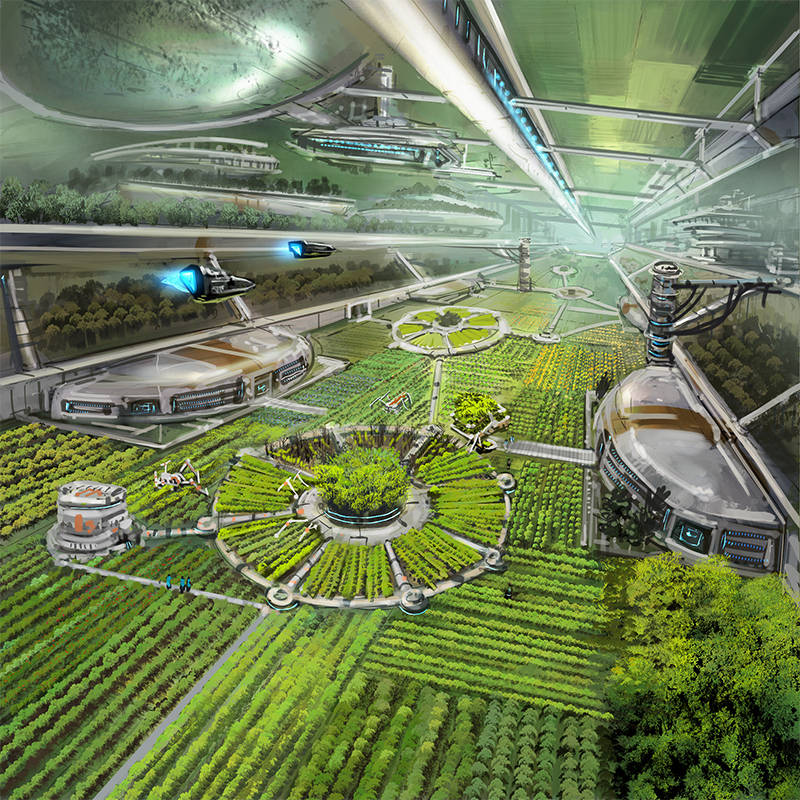
More realistically, a significant portion of the planet would have to be given over for agriculture and the logistics of that agriculture. With conventional farming, today we use about 7000 square meters per person and could conceivably reduce the use of land to 1200 square meters per person, which would let us feed 73 billion people at today’s efficiency or 425 billion people with reasonable reductions, if the whole planet’s surface was farmed. Of course, this has its own problems–not all the land on the Earth is arable, not all the surface of the planet is land, and land near the poles does not get enough sunlight, ignoring a billion other things related to climate and transportation and everything else. A farming-based Kardashev-1 civilization would certainly be a sight to see. All housing would be under the surface, to free up more area for farming, and the world’s surface would likely have to be as flat as possible. Perhaps the oceans would be covered in grids of floating farm platforms, and much of the crust would be ground up and processed into soil, in addition to heavy use of hydroponics. At that point, the water cycle would be almost completely manual, with water being pumped around and irrigation runoff collected. The planetary albedo would be exactly that of farmland, and there would likely need to be significant geoengineering to keep everything habitable.
I imagine a world that looks like a big green-brown sphere, with occasional clouds. Towers occasionally jut up from between the fields, tall and slender to avoid casting too much of a shadow, and spaceplanes launch from the top levels of these spires as enormous tractors roll from their bases. People live beneath the fields, maybe with a window out to the surface in places, giving them a view of the blue sky overhead, and the endless fields. Further beneath them, there are layers of heavy industry, making the machinery that keeps it all running. Life is lived underground, except for the billions–a small minority of the population—that venture out to repair stuck machinery or have some other work on the ground. The nights are short due to solar mirrors, and life is untethered from the conventional rhythms of day and night.
This is, of course, not the only way to run an ecumenopolis. With additional power sources, like major space solar infrastructure or nuclear fusion, it would be possible to condense those food production areas and place them underground instead of land area, the question would be volume, and there would be no need to dedicate all surface area to farming. Instead, the inhabitants of this world could live aboveground, in enormous towers, with cavernous vertical farms beneath. With such a system, the ability to import energy, living space, and waste heat would be more important limiting factors.
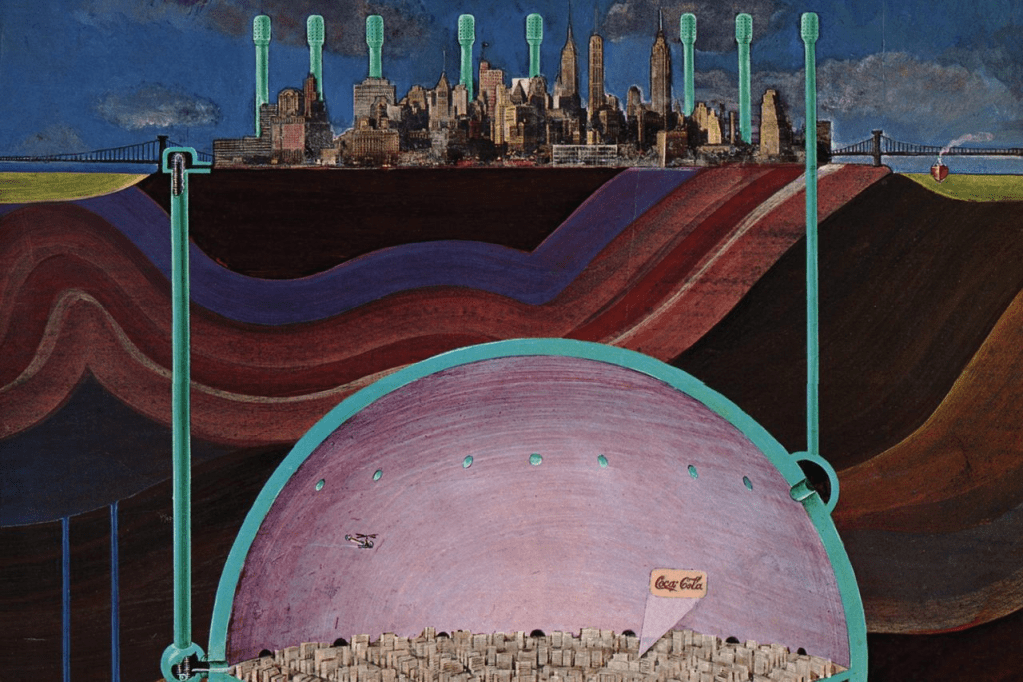
Life might involve towers stretching into space, pumping up coolant to space radiators, or skyscrapers with radiant cooling beds scattered around their bases. Being on the edge of the tower could be hazardous, due to strong convection currents, and the radiator beds might glow red hot, giving the planet the appearance of a jagged ball of black spikes from above, surrounded by moats of lava. Transit between the towers might be done with an underground rail system, or bridges high in the sky, some long enough to be their own buildings with their own cultures and people (like London Bridge!), living their whole lives suspended between two spires, the radiator beds beneath them always blasting upwards. Going outdoors might be extremely dangerous due to the high temperatures and lack of oxygen. Spaceplanes and rockets would depart from hangars within the towers, having few places to land on the ground. The planet would likely have violent but small-scale weather, with the convection currents forming momentary tornadoes that bounce off of the walls of the spires and the dissipate. It might be helpful to remove the atmosphere altogether, at this point in development.
These models are sort of opposite one another. Life on the outside, or life on the inside, and are likely quite extreme. I am not sure if there is any reasonable use case for an ecumenopolis, but I suspect that if one was developed it would include parks and living things on all levels. Perhaps the majority of food is grown underground, but the towering spires of civilization have beautiful terraced gardens, or even just small community plots like in Ted Chiang’s Tower of Babylon. In any case, these worlds might actually support a higher total biomass than Earth does today, although biodiversity would be much lower. A world dominated by human intent would be biologically very mundane and the ecosystem would be weighted heavily towards domesticated plants and animals. For the people living there, there would be no wild things at all.
 J. E. Landau
Leave a comment