In The Expanse, one of the major early plot points is that the Mormon church, far in the future, is building an enormous generation ship to travel to another star. The ship is called the Nauvoo, and it was supposed to go to Tau Ceti. Ultimately, the ship does not go on its interstellar journey, but it’s an interesting concept.

As was pointed out by the Salt Lake Tribune, the idea of going on a journey to settle in a new place has been common for Mormonism in general. Originally based in Illinois, the Mormons found themselves in conflict with locals, partly for religious reasons, and ended up traveling west to Utah, to find a place where they could live in relative isolation. This journey was arduous, done with covered wagon trains, and involved tens of thousands of people. It was expensive and difficult, and the people who moved had few of the comforts they had left behind in Illinois. But they still went.
I think that this might be one of the most likely scenarios for colonizing another planet or star system.

There are several barriers to establishing a settlement in space. First, and in my mind, most seriously, there is no good reason to go. Second, it’s really dangerous. Third, it’s expensive.
Now, many science fiction fans might object to the argument that there is no reason to go to space. It’s a bit of an overstatement, but I think it’s the simplest way to describe the problem. At the moment, there are no clear ways to make money in deep space. There are reasons to go, for science, for the preservation of humanity in the case of a catastrophe, or for national prestige, but these reasons aren’t “strong” reasons.
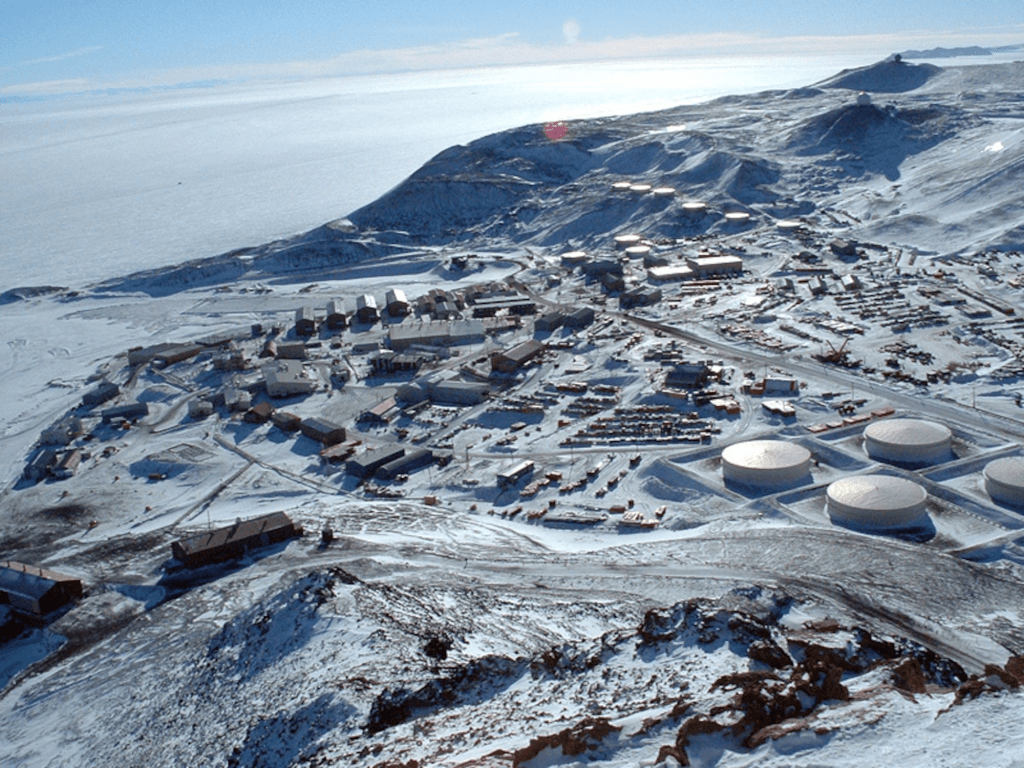
The scientific motive is very noble but we have seen, for example, the United States retreating from many scientific space missions, and funding will probably always be limited. And scientific motives are almost certainly insufficient to establish a major colony. Antarctica has been the subject of serious scientific interest and exploration for more than a century but only a few hundred people live there year-round.
Similarly, “preserving humanity” sounds great but it’s a pretty distant concern. Few people believe that human extinction is close, and some authors have made the argument that moving into space might actually increase the risk of human extinction by breaking down some of the agreements about peaceful use of space (specifically, I’m thinking of Zach Weinersmith’s A City on Mars but I’ve seen it discussed elsewhere).
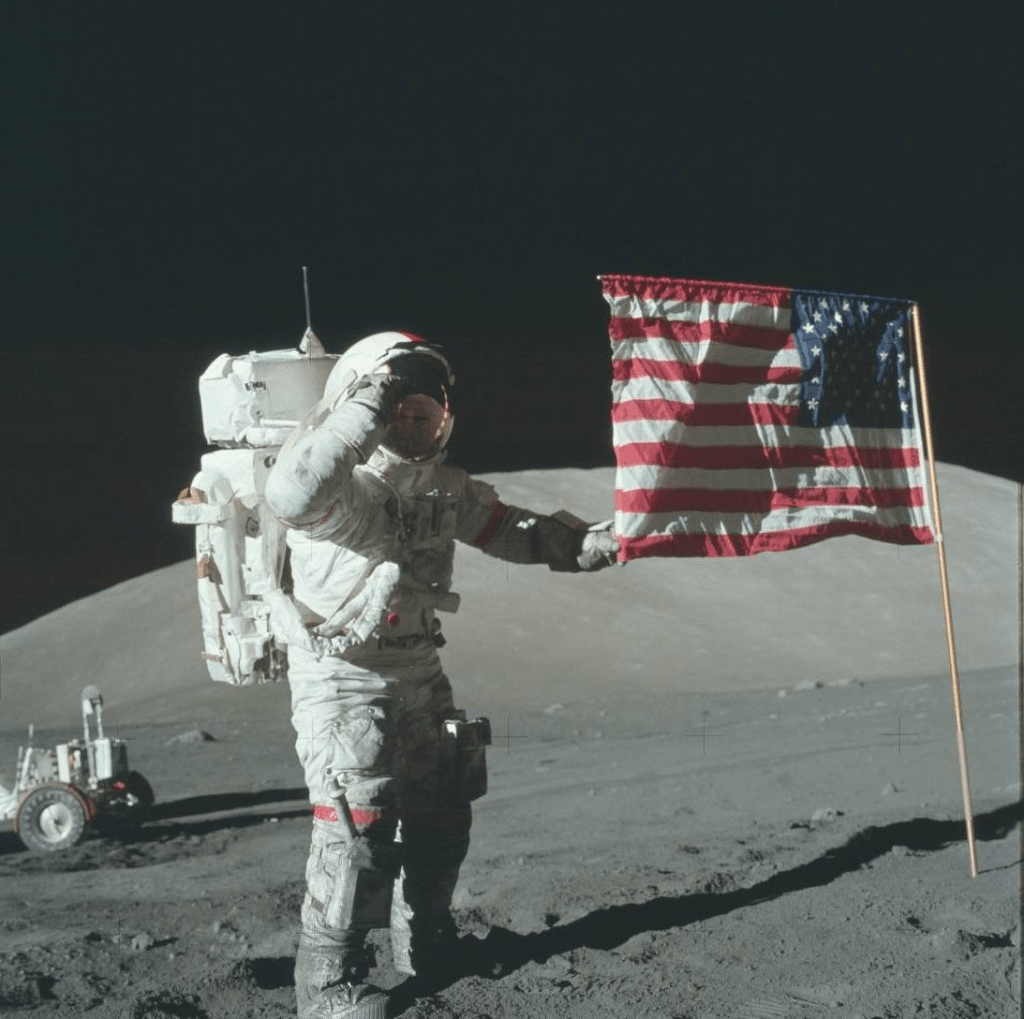
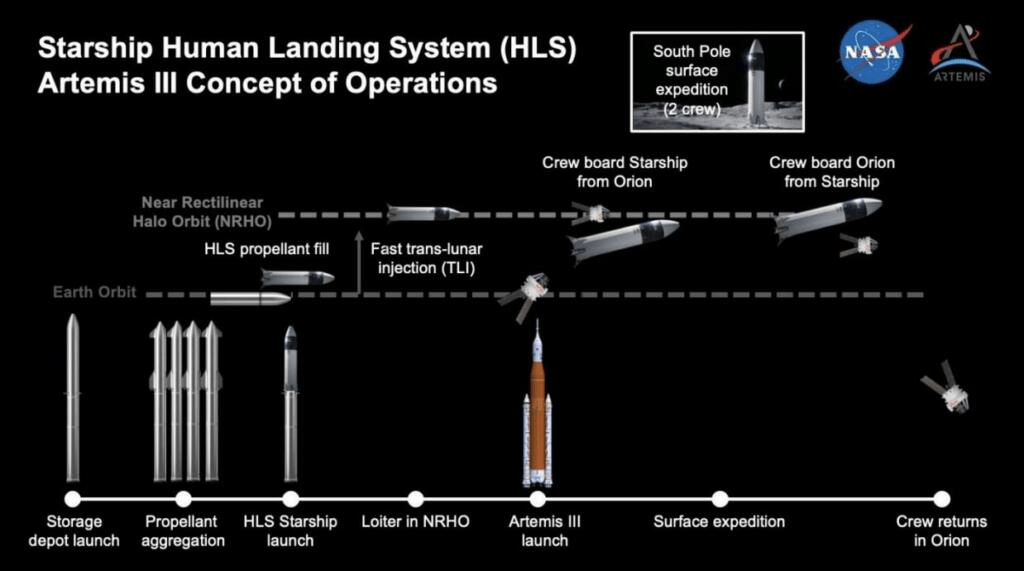
And national prestige is a very ephemeral thing. Is space a better way to show off your nation’s power than a strong military, a social welfare net, huge infrastructure projects? Launching rockets is more moral than going to war and conquering new territories, since it definitely kills a lot less people, but prestige projects like the Apollo program and the modern Artemis and Chinese Lunar Exploration Program seem like they are unlikely to produce large-scale and sustained presence in space.
Some science fiction writers have proposed that there might be valuable resources in space. Larry Niven wrote about zero-g magnetic monopoles, something which has not been found to exist, but which would have a variety of industrial applications that would justify going to space to get them. Nowadays, there have been a few attempts to find something like that: helium-3, platinum group metals, and exotic fiber optic cables are some that I can think of with recent or ongoing research and development, although it remains to be seen if any will be financially viable. Even if they are, that might not lead to a large-scale industrialization of space (although I am cautiously optimistic on that point), and instead we could end up with something like the Siberian part of Russia, where there are significant resource extraction operations supported by tiny towns, and huge empty spaces in between.
On the second point, space is inherently a very dangerous environment. It has no air to breathe. As a vacuum, environments exposed to space can be scorching hot or freezing cold, without air to even out temperatures. Radiation can cause immediate death in bad times and long-term health problems in good ones. In general, any life in space requires extensive technical support.
Even the less dangerous parts of the solar system, like Mars and the upper atmosphere of Venus, are more hostile than anywhere on the surface of the Earth. Mars is colder than Antarctica, and unlike Antarctica has a thin atmosphere composed entirely of carbon dioxide. Venus on the surface is downright hellish, but some have proposed colonizing Venus’s sky using aerostats, which have the advantage of relatively pleasant temperatures and pressures but which exist in an atmosphere with significant amounts of hydrochloric acid—not to mention the fact that a Venusian aerostat would struggle to access the surface for mining.

Now, people have settled and do settle hostile places. Utah, mentioned at the beginning of this post, isn’t exactly the Garden of Eden, and there’s an argument to be made that the settlement of places like Siberia and Antarctica has been slowed due to non-material factors like treaties protecting the Antarctic environment and Russia’s historical policy of prioritizing Moscow and St. Petersburg to the detriment of more peripheral regions of the country. That hasn’t stopped Argentina from operating Esperanza Base, site of the first Antarctic childbirth or the various cities in Siberia. And these places may be somewhat analogous to a space colony, in that they are very reliant on long logistics trains stretching back to the rest of civilization, and a serious technical failure could lead to the death of everyone living there.
And, beyond that, getting to space is difficult. Travel between planetary bodies and moons is time consuming and can only be done with certain planetary alignments, called “launch windows”. Even just getting off the surface of the Earth requires burning enormous amounts of fuel to lift spacecraft through the atmosphere, and every piece of fuel you want to take to go further also has to be lifted, making travel into deep space complicated and expensive.
This is the third major point, and probably the biggest problem for colonization of space. Space launch is getting cheaper, at least for travel to Low Earth Orbit, but comparing the cost of moving packages to Antarctica to the cost of moving satellites to space, it is more than 100 times cheaper to move goods to Antarctica. And all that life support equipment, to refresh air, recycle water, protect against radiation, and grow food, has mass, too.
And, of course, all the equipment needed to live in space is expensive. You need special habitats, machines to keep people alive, rockets, space suits, and special medical equipment just for a basic expedition. To extract resources and support a growing space colony, you need factories, extraction machines, and, at the very least, the ability to produce something worth trading for with Earth—and you will almost certainly need that, because many of the most advanced items that our civilization is utterly dependent on, like microchips and drugs, have extremely long and complex production chains that it would be nearly impossible to relocate into space.

There are other problems. Living in space could cause new medical problems. Many people would object to raising children in the confined environment of a space colony. Governments might not want to have much to do with a space colony, anyway, because colonizing space raises a lot of uncomfortable questions related to stuff like the Outer Space Treaty, and the Outer Space Treaty is connected to control of nuclear weapons and a few other difficult problems.
But, religious organizations might be best-placed of any group to deal with these problems. They address all three points pretty well, and so I think that future space colonies might be religious instead of governmental.
First, why go? Well, if you’re very, very religious, there is often a desire to live in a society dominated only by people with similar views. The Mormons went west because John Smith, the religion’s founder, was killed in a gunfight in Illinois. Similarly, the American Pilgrims were Puritans who wanted to be a shining city on a hill in the Americas. For religious groups with extreme ideas, moving to a remote location helps reduce conflict with the surrounding world. More sinisterly, high control organizations (cults) operate by isolating their members, and moving to space eliminates the possibility for members to visit the outside world at all. It also lets any religious group build something truly new, without having a foundation of local culture.
Being religious doesn’t reduce the material difficulty of living in space, but it does make bearing it a lot easier. Extremely religious people living in tight-knit religious communities often have high life satisfaction despite poor material conditions for a variety of reasons and I have to imagine that believing very strongly that you will go to heaven would make it easier to live in an extremely dangerous environment. In general, people with a lot of purpose tend to do very well, and religious space colonists would live purpose every day.

Finally, religious groups sometimes have a whole lot of money. The Church of Jesus Christ and His Latter-Day Saints, the governing body of Mormonism, is one of the richest religious organizations in the world with more than $200 billion in assets as of 2025. This is because of an aggressive system of tithing that effectively collects financial resources from members, and the organization’s highly centralized structure that invests collective money effectively, maintaining and growing the organization’s wealth. Other religious groups are less wealthy, but Wikipedia lists many religious organizations with tens of billions of dollars and it’s possible that there are more wealthy religious groups that are less publicly-known. This wealth could help cover a growing space colony while it works to become self sufficient, in addition to paying for the initial costs of colonization.
$200 billion is a lot of money. Is it enough to fund a space colony?
Maybe. Numbers vary wildly. For example, the National Space Society, a group that advocates for space colonization, estimated that a space colony in orbit of the Earth would cost around $190 billion and Elon Musk (never especially consistent) has given numbers between $100 billion and $10 trillion for creating a self-sustaining city on Mars, but generally cautious people do not give hard numbers for these things. The truth is, it is difficult to estimate the cost.
But it seems plausible that it’s within reach for the Mormon church, if not now, than in fifty or a hundred years. Other religions might be able to collect and use wealth even more efficiently, and might have more of a drive to go to space.
As a science fiction writer, I think that these ideas should flavor pictures of outer space colonies. I have seen lots of stories with space stations and asteroid bases run by Earthly governments, that work like their own governments, or which are corporate, but very few that are religious. This is more common in space opera settings, but I still can’t think of many examples at all, and where I’ve seen them, they’re the exception, rather than the rule, like the Lord’s Believers in Sid Meier’s Alpha Centauri, which is just one of more than a dozen factions in that game.
I’d be curious to see sci fi settings where religious thinking is pervasive and affects the way that all cultures and characters operate, not just a few small parts of the whole setting. I imagine that there would probably be a period where none of the space colonies get along well with each other at all, since they all have different and very strong religious views. But, over time, I suspect that there would be cooperation just for practical reasons if nothing else, and this might lead to a greater understanding, then transculturation, leading to an environment with very strange cultures that are somewhat alien to us today. What would the result be of strongly Mormon, Hindu, and Islamic space colonies all gradually growing into each other in a conurbation on the surface of the moon? What would that culture look like?
There is no way to know for sure. Which means that it’s fertile ground for science fiction.
 J. E. Landau
Leave a comment