I recently heard about a tech startup called R3 Bio, which intends to produce literally brainless human clones of wealthy clients, which can be harvested for organs or used for full-body transplants. Theoretically, this would allow for people to live forever, since their failing bodies can be replaced to preserve their minds.
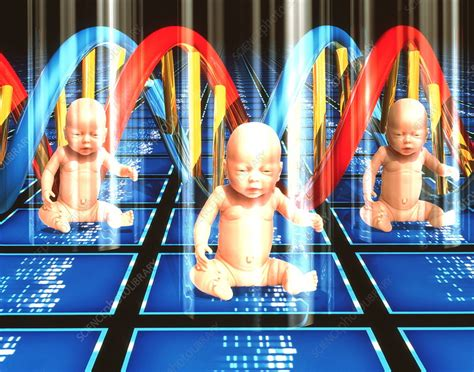
This is a fairly classic topic of dystopian science fiction. Off the top of my head, the video game Ruiner had related elements in its premise. Larry Niven’s Known Space stories include near-universal organ harvesting on Earth, including organ harvesting for minor financial crimes and repeated traffic violations, because the population is desperate for organs to keep themselves alive. In Repo! The Genetic Opera, the trade in organs is basically universal, and everyone is full of organs from a variety of sources.
Now, it’s important to note that R3 specifically wants to create clones that do not have brains, and so (probably) cannot suffer when they are raised and killed for their organs. There are still lots of moral questions, for example, in how they will develop these clones and raise them to adulthood, but there is an attempt to address some of the moral questions that have been raised in science fiction. And they aren’t the only ones discussing something similar.
The company BrainBridge has discussed creating machines to perform a procedure called a “head transplant”, which is exactly what it sounds like. You remove the head of one patient, and place it on the body of a donor. Of course, it would probably be more accurate to call it a “body transplant”, but the procedure has received significant press, and even (probably false) reports that it happened. The main doctor pushing for the procedure, Dr. Sergio Canavero still says that the procedure is possible despite the lack of animal successes. But, this procedure requires a perfectly health donor with no brain function, which raises additional ethical questions (wouldn’t that donor’s body be better used to provide organs to many people who need, say, heart, kidney, and liver transplants?).
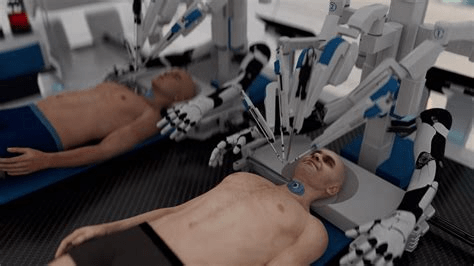
I think, fundamentally, both of these procedures have the same result socially, however, which is making human bodies an even more literal resource to be used by the rich and powerful. There’s nothing new about that observation, but it’s interesting to think about how even biology can become entangled in money and power.
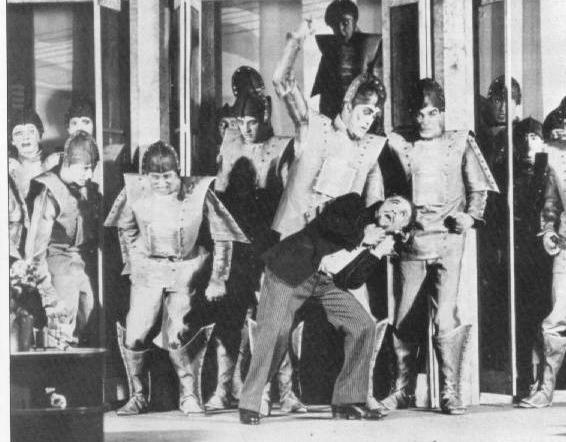
This is a very old dream. The oldest robot stories were about machines that could do brute labor, replacing ordinary workers, such as in the ancient Jewish myth of the golem, or the robots from R.U.R., the story that coined the term “robot”, derived from the Czech word “robota”, meaning menial labor. The robot is a person that can be created in a factory, and used to do tasks that ordinary people would not want to do.
This is not necessarily an immoral thing, I think, although there are obvious moral questions that have been posed, and which have been covered extensively by science fiction, such as Asimov’s robot stories or the film Blade Runner, with stories running the gamut of relationships to machines of varying degrees of intelligence, autonomy, and morality. But, there are unpleasant and dangerous jobs in society, and I think most people would agree that it’s good when machines make life happier and more pleasant—assuming that those machines aren’t forced to be miserable, themselves.
But, I think that there is also a strain of thought that treats people like resources. Because they are, from an amoral, calculating, and high-level perspective. If you are a government or a corporation, a person is a number, which contributes something to your GDP, your military, that pays a certain amount of taxes, and consumes a certain amount of social spending. If you’re the president, you might genuinely feel empathy for the people you govern, but that doesn’t mean that those people aren’t a resource at your disposal.
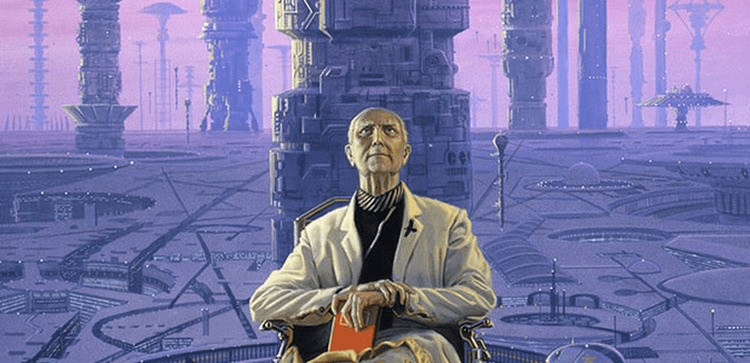
And, recently, there has been a fair bit of anxiety about demography. They say that “demography is destiny”, and the case of China has shown that strong demography can propel a country to incredible heights while more challenging population breakdowns can drive serious economic and political problems. Some scientists, such as cliodynamicists, who seek, like the psychohistorians from Asimov’s Foundation, to mathematize societies to make predictions about the future and under stand history, have developed rather messy equations to describe these things, but most experts agree that demographic issues are important.
Now, some of these demographic concerns are perhaps driven by racist fears about replacement by minorities or vaguely pathological needs for immortality through reproduction but it’s apparent that demographics are seriously important. A society that’s entirely elderly people, or entirely children, cannot perform the economic labor needed to survive and grow. The economy requires people to work, spend money, and do things, and without this, there is at least a numerical decline and probably an accompanying decline in material conditions.
Now, this is not necessarily a bad thing. Some futurologists have proposed that most human labor can be replaced by automation, leading to a society where machines do the work and everyone else sits around in a big, pleasant retirement home. This can be a dystopian vision, if you’re so inclined, but it doesn’t have to be. This transformation is already taking place, and if it goes well it could be rather pleasant, with the population leveling off at some point, and people living lives of luxury and robotic pampering.

But, I think it’s interesting that these robots are expected to replace members of the population. They fill in for care, retail, and hospitality workers, which are jobs that are often done by young people and which are considered undesirable. Other machines have replaced industrial workers in factories.
But, these machines have one key flaw, which is that they do not spend money or pay taxes. This means that they do not contribute nearly as much to the economy as full-featured meat-people do, and presents a problem for the long-term stability of government and finance. So, there is some need for people, whether they are machine-people or meat-people, who can pay taxes, fight wars, spend money, and generally perform the non-production functions of a person in a(n) (post-)industrial society.
This leads, I think, to the dream of manufactured people.
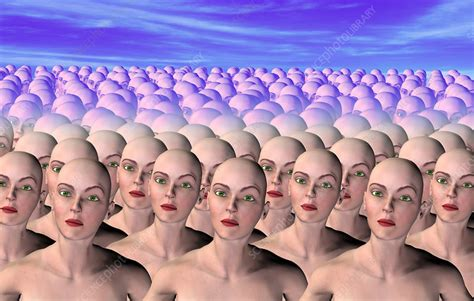
Maybe these people are robotic. The government contracts a company to put out a bunch of robots, or a bunch of cloned people (with brains) to act as new people, and these people are manufactured and let out into society. They grow up under professional or state care, or they are created with all the things they need to be adults, and then they go and do jobs and make and spend money to keep the economy going. The advantage of this vision is that it can be done to quota. The Chinese government has done a great job of motivating its people to do lots of things, and people in China have worked very hard to orchestrate the industrial boom in history, but it’s very difficult to get people to procreate if they don’t want to. With manufactured people, you can set a quota and have that many children. It gels great with state planning and it lets you set your population targets and meet them every year, more-or-less.
Of course, there would be a great human cost to developing this technology, and I don’t want anyone to think that I’m advocating for it. Even if the biotech or computer side of making people in a factory is figured out with no problems, I think you’re going to have at least a few generations of people who are raised poorly because everyone is still figuring out how to do it right, and I think that the harm done to those children would be appalling.
I also don’t think that many people would be willing or excited to be involved in this. But I do think that an authoritarian regime could make it happen, by force. The nature of authoritarianism is that governments can do things without the consent of the governed, and I believe that a government with serious demographic fears could pursue this project even if it contradicts the moral values of the people living there.
This vision is not something that I have seen discussed much in science fiction or science more generally. The closest I can think of is economist Robin Hanson’s Age of Em, where enormous numbers of emulated people run the economy, stored on computers. Each of these people is copied from some more docile personalities, and they work hard, producing enormous economic growth.
Brain uploads really make this sort of thing incredibly accessible. If you can copy adult human minds, you can take a few of your best performing workers, scan them, and use copies of them to fill all personnel requirements. If you need to fire people, that’s okay. You can just delete them (kill them). Need more? Just make more copies. If you copy a trained employee, you don’t need to do any training for the new copies, which could save an enormous amount of money, and you can streamline all your processes immensely. This is also an incredibly monstrous vision for the future. But it is one that would really benefit the winners in such a scenario, unfortunately.
Now, once the technology is developed, I don’t think it has to be dystopian at all, if it’s used responsibly in an ethical society. I recently read the novel The Office of Mercy, which concerns a rather evil society, but the way that they create people is, in my mind, actually a pretty good model for how a society might employ this technology in a less horrible way. Children are created infrequently, in big batches, once the previous generation is old enough to take care of them and there’s enough space for them. They are given names selected by the community, and they are made from a diverse set of genetic samples. They are treated as distinct people, with equal rights in their society to the other members. Now, the society in The Office of Mercy is quite dystopian, but mostly because it’s extremely hostile to the outside world and is committing horrible crimes against the people living there, but I think that the way that the manufactured people are treated is good.
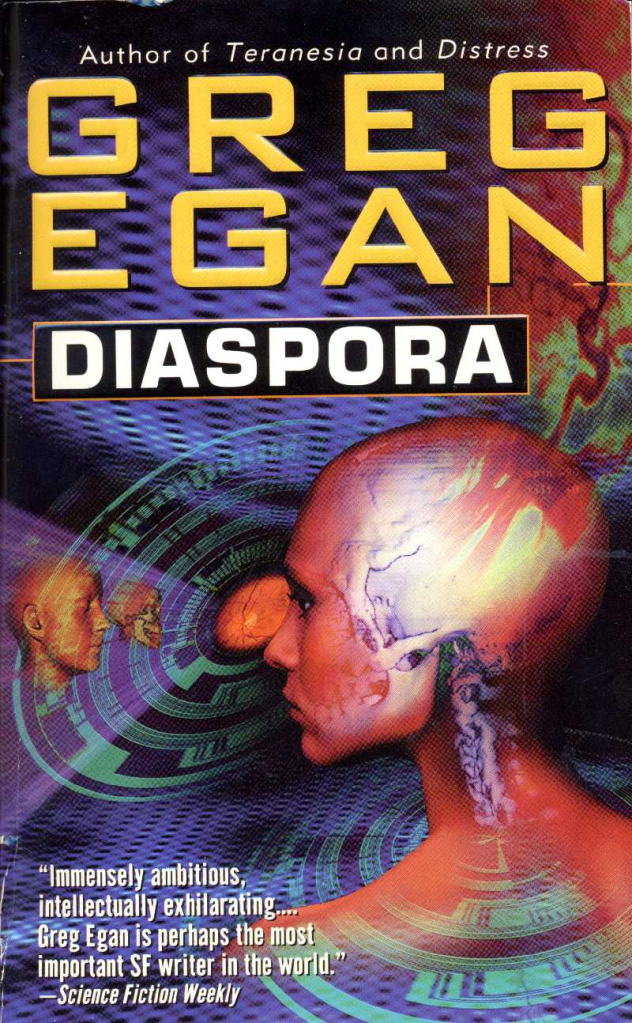
Another example of this might be Greg Egan’s Diaspora, where people are created by a computer system, which bases their minds off of past templates with some significant random variation, and then educates them very quickly by exposing them to informational libraries and eventually their peers, helping them develop as unique people, form friendships, and take a place in society.
I haven’t seen it in any fiction, but I think it would also be interesting to explore a world where children are created as a real community effort. They say that “it takes a village” to raise a child, and that’s definitely true, but it might be interesting to explore science fiction stories where people are manufactured and sculpted to create a vibrant society. And, of course, there would be political disputes, but these might be benign, like balancing economic growth with having a good childhood, or making sure that different demographics are represented. The ethical issues are incredibly thorny, which is exactly why I think they should be explored, because it’s important to address the ethical problems of people who want to do the right thing, not just out-and-out evil.
But, for the short term, I fear that these corporate programs to create artificial people will cause more bad than good. Body backups for the rich might be nice for those who can get them, but the experiments needed to get there will no doubt be very expensive. And I worry that in the process, we might end up with a society that treats human life as a resource to be expended, where democracy is an incoherent idea, and where powerful people control everyone down to the cellular level.
 J. E. Landau
Leave a comment