Today I finished reading Ninefox Gambit by Yoon Ha Lee, and I enjoyed it a quite a bit. I don’t read much military science fiction, but I’d heard good things about the book from some acquaintances so I figured I’d give it a shot, and it really exceeded my expectations.
The book is about the soldier Kel Cheris, who is assigned to take on an extremely difficult mission, and as a part of this, she has the ghost of the infamous general Shuos Jedao attached to her mind, allowing her to receive advice from him. Already, this sounds rather strange, but the setting itself is probably the most exotic part of the novel and it was what really got me excited to finish it, once I started.

Ninefox Gambit takes place in a universe where calendars are everything. Ritual celebrations, remembrances, and tortures have to take place on specific days to keep this system going, and this allows for enormous powers to be wielded, including highly destructive weapons such as the “threshold winnower” (something like a nuclear weapon). If people do not adhere to the empire’s calendar, these effects will fail, and a lot of the novel involves Cheris working to understand the heretical calendar system created by rebels in one part of the empire.
And it’s really, really strange. The novel throws you in at the deep end, talking about all these things as if they are simple facts of life. Soldiers have to stand in specific formations to use magical effects, and this is just accepted immediately and there isn’t any point where the audience is sat down and given a lecture about it. Looking online, I see that some people hate this part of the story, but for me, I think it’s what makes it really work.
This is a broader phenomenon in science fiction. I first read Dune when I was in my early teens, and that book is also pretty illegible to start off with. The novel is really heavily based in Middle Eastern and Persian aesthetics and the book starts off with confusing language, talking about devices that do not exist in real life and casually using words that the audience is unfamiliar with. When Paul Atreides is tested with the Gom Jabbar by a member of the Bene Gesserit and compelled with the Voice, this immediately puts the reader off-balance. Then, many other aspects of the settings are exotic, like the complete absence of computers and the light but pervasive transhumanism that keeps the society running. Lots of people hate this, and find it confusing, understandably, but I think it’s also part of why the novel works.

When you present an exotic setting as a science fiction author, that immediately creates intrigue for your audience, acting sort of like a forward strategy for the piece of fiction. Your audience asks, “what the hell is going on?” and is forced to pay attention to the rest of the story to get an answer.
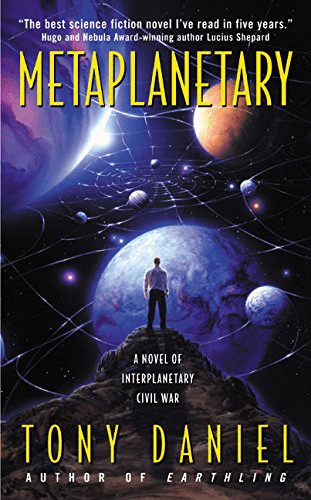
One novel that I am quite fond of, but which handled this problem badly, is Metaplanetary by Tony Daniel. The novel starts out with some religious discussion that is not especially clear, but is then followed by a scene where a man (who is the combination of all the versions of himself that have been and will ever be, probably) is using ferrets made of junk code embodied in loose nanotechnology collected in a drain in a vast interplanetary network linked together by physical cables to hunt rats also made of junk code to collect useful data. Unfortunately, his “ferret” is harmed by the “rats” and to save its life he ends up combining it with a corporeal advertising program that falls out of a bottle of liquor and tries to seduce him, turning the ferret into a sort-of-human hybrid person.
Now, this is completely deranged even now that I am explaining it in plain language, but the novel’s language is far more oblique. The ubiquitous nanotechnology is called “grist”, the cables are the eponymous “met”, and the man is a “time tower” which is a special kind of “LAP” or “large array of personalities”. And this is all lobbed into the audience’s lap like a brick through a window. Later chapters mention that the story has light time travel, AIs of various degrees of sophistication, and that the government is sort of the internet but also sort of a dictatorship run by one megalomaniac who controls people with a digital drug called “glory”.
The first time I read the novel, I was completely bewildered until the halfway point, when Daniel stops the story to give a 20 page history, science, and politics lesson about the story’s universe, at which point things become much clearer. This is completely ham-fisted exposition, and it introduces even more exotic concepts like something called a “teleological constant” and there is a fair bit of time spent talking about poetry and other similar things.
It’s a complete mess, and honestly Metaplanetary is overall a beautiful disaster that I am quite fond of. But one interesting thing about reading the book, is that once you have read it and understand it, it’s pretty difficult to talk about the things in it. The audience is sort of initiated into a private language of the words in the story, and I could talk about the LAP concept or how Glory works to a friend, but I’d have to spend a whole bunch of time defining all the terms and setting the stage for the universe. Explaining what free converts are doing in the data mines of Noctis Labyrinthus is a bit easier.
And, more broadly, I think that this is sort of the process of getting really involved in science fiction. I’ve had arguments with people about stuff like time travel mechanics and brain uploading that start using phrases like “cognitive functionalism” or “B-theory of time” that are key to their arguments, and completely illegible to outsiders.
And I think there might also be a fundamental difference between some kinds of science fiction and others, in how they work with these concepts. Some works are very concerned with thoroughly presenting one big strange idea. Professor Everywhere by Nicholas Binge is just about traveling to alternate universes, in terms of its speculative elements. This process is not discussed in detail, and although these alternate universes are strange, they are not explored culturally or as worlds, really, they are just visited briefly and then left.
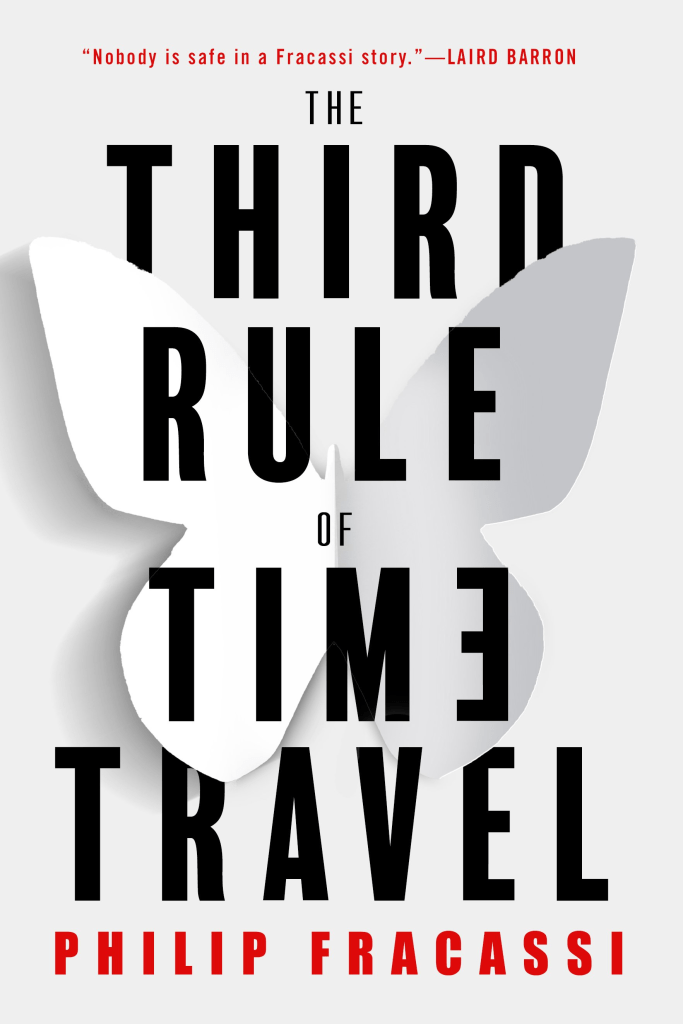
Similarly, The Third Rule of Time Travel by Philip Fracassi has one big idea: there’s a machine that does mental time travel. The entire novel surrounds this machine, and the mechanics of this machine, but it otherwise takes place entirely in our world, with most of the events in the story being entirely understandable and familiar. The protagonist is someone who could exist in our world, doing a job we have today, and who lives a life with bills and rent and a kid she has to take care of.
I think that this sort of science fiction is more common for “literary” or “upmarket” sci-fi, probably because the average reader of literary fiction is uncomfortable dealing with the heavily speculative elements and bizarre worlds. On the other hand, something like Metaplanetary is pulp all the way through, with a picture of a man standing over a spiderwebbed solar system on the cover, and with a mass-market paperback format that would fit on a shelf full of Baen. By comparison, The Third Rule of Time Travel comes in full-size paperback format, as does Professor Everywhere, with a dignified and abstract cover that could really go on a whole host of novels.
Strangely, I think that Dune has become literary by the virtue of sheer success. The novel is born-and-bled sci fi, with a big speculative universe and lots of weirdness to enjoy, but it has entered into mainstream pop-culture after adaptations by Lynch and Villeneuve (the Syfy channel miniseries is good, but I don’t think it really hit the public consciousness that way) and so has become broadly acknowledged for its literary achievement. Isaac Asimov may have reached this status, too, but I haven’t seen it nearly as much.
And, honestly, I think that this is a shame. Lots of people have already whined about how science fiction and fantasy isn’t taken seriously in the more formal literary world, despite its commercial success, and I won’t repeat any of that here. I don’t really think that sci fi authors should worry too much about winning Pulitzers, although I understand the desire for fame and recognition.
But I do think that sci fi has a lot to offer the world of literary fiction. Speculative writing can be surreal and innovative in ways that traditional writing, I think, would really struggle to do. Recently, I’ve been considering some more bizarre kinds of narrative, playing with tense and the role of the narration in the universe of the story, and I feel like these ideas end up in a sort of weird place, because they are based in a love of the English language and a desire to explore prose and the structure of narrative, but they also require a heavily speculative setting to work.
And that makes me wonder, what’s out there? I have read a lot of really wonderful fiction in short story form, some of which was incredibly beautiful, and I feel like sci fi magazines cater to this sort of experimentation in a way that mainstream novels can’t, because the format relies a lot less on selling each individual story to the largest audience possible.
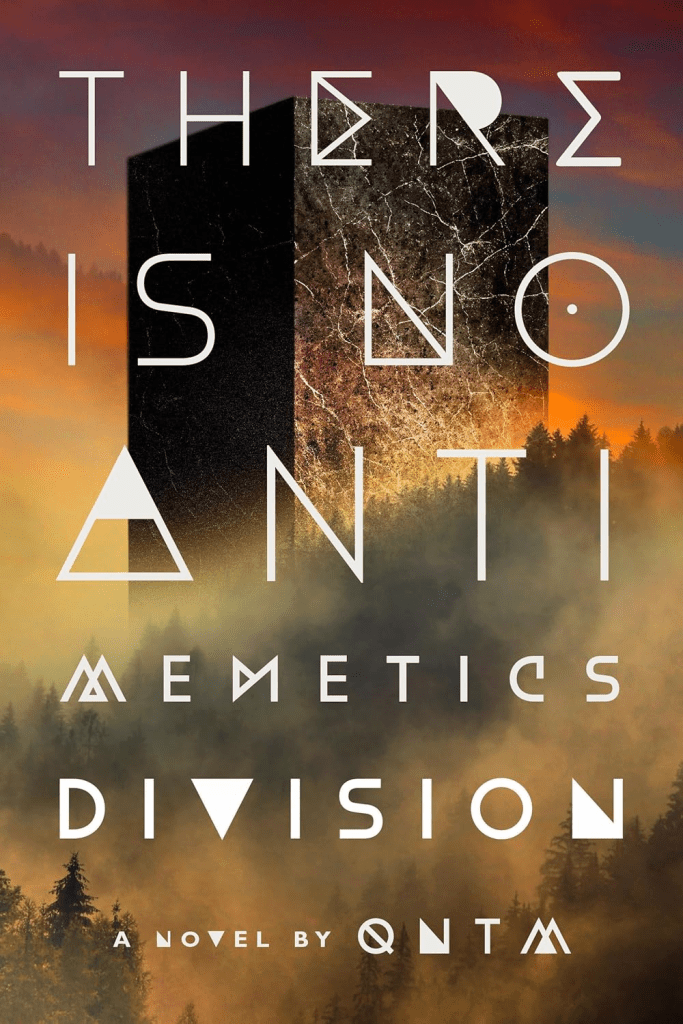
But the internet is even more varied and I think that it allows for some genuinely quite weird writing. There’s been a little bit of that, with surrealist writing coming from people like Qntm and a variety of online communities, but I feel like there’s a lot that I’m missing, just because it tends to be harder to find more obscure writings. What about plural narration, or stories that play with time travel in new and exciting ways that are reflected in the text? I dream of settings that are completely illegible, but also beautiful and beautifully written and which push the boundaries of what writing could be.
I also wish that there was more of a market for speculative poetry. I have read a fair bit of it, and I do enjoy it, but it’s very obscure and I haven’t found as much of it as I would like. I am a poor poet, but I do like reading the writing of others.
That digression aside, I think that the illegibility of science fiction is really one of its key advantages. It can draw in a reader, tantalize them, and it also helps make people feel like they’re part of a community. Once someone really understands the language of a sci-fi story, they’re inducted in a club of people wo also know all the secret handshakes, and that can be really powerful for forming connections between people. I think that this is part of what draws people to science fiction, and I also think that it is (cynically) useful for writers who want people to connect strongly with their work, which can be useful for creating brand loyalty.
But, honestly, I think that there is something beautiful in the community created by speculative fiction. I have made many acquaintances, with whom I have very little in common except for the fact that we have similar tastes in media, and I have been able to learn things from them and bridge wide interpersonal divides. That, I think, is worth a lot.
 J. E. Landau
Leave a comment