I recently rewatched the movie Sphere, which is based on the Michael Crichton novel of the same name. It is about an expedition to investigate a crashed spacecraft at the bottom of the ocean, which as it turns out is from the future. The people investigating find the titular sphere and some other things happen which are more important to the movie, but one character, upon finding out that the spacecraft is from the future, notes that:
“Ted did figure it out – time travel. And when we get back, we gonna tell everyone. How it’s possible, how it’s done, what the dangers are. But then why fifty years in the future when the spacecraft encounters a black hole does the computer call it an ‘unknown entry event’? Why don’t they know? If they don’t know, that means we never told anyone. And if we never told anyone it means we never made it back. Hence we die down here.”
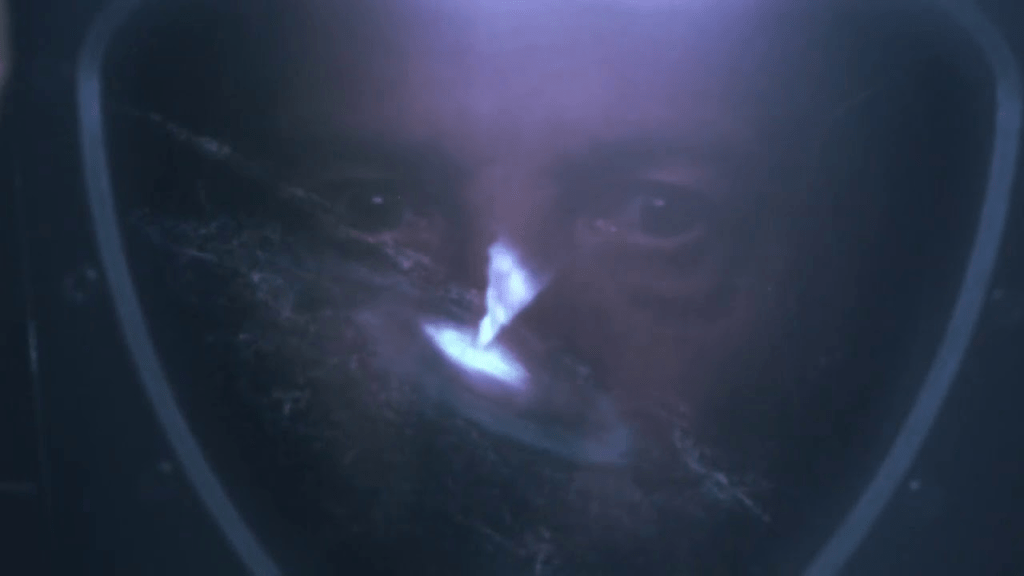
Now, this is good reasoning—assuming that you’re living in a single, self-consistent timeline. But that’s a big assumption. It’s not an unreasonable thought to have, since it is the simplest explanation and is one that has some real physics thinking behind it (like the Novikov Self-Consistency Principle) but it’s not necessarily the truth.
Probably the most famous time travel story of all time, Back to the Future does not operate on this rule. Instead, each time one travels back in time, this creates a new timeline which may resemble the old one, but changes when you re-enter it. This means that time paradoxes cannot occur, because the causes of events need not exist in the same timeline.
Now, in the case of Sphere, let’s say that they find the crashed spacecraft from the future, and learn about it, and share this information with the world. Then, in the future, when the space mission is launched, the people aboard it will be aware that time travel is possible and be able to do things differently. Instead of causing a time travel paradox, this just creates a new timeline, where in the future, events will transpire differently, and that’s okay. This might seem like a violation of causality, but it is not. Instead, it is simply a form of paracausality, which is where events are causal but causes may not strictly precede effects.
But, if you’re in the position of the scientists in Sphere, how can you know this for sure?
The obvious solution would be to change the timeline and see what happens, but this could have unknown or dangerous consequences. It would also take a long time, and might not even be conclusive or noticeable.
One issue with studying time travel is that if it influences causality, it can be very difficult to determine how it does so, since that itself is a causal effect. For a simpler example, let’s say that you have a time machine that lets you send information ten minutes into the past. You, the scientist, look for this signal, and don’t receive one, so after ten minutes you decide to send a signal back.
If the timeline is stable and unchanging, then the signal you send back will not be received. Maybe the machine is broken, or some phenomenon prevents you from seeing it, or your memory is discovered to be faulty about some part of the experiment. But these events are also possible if the timeline isn’t stable and unchanging. Your machine could be broken, or work in a different way than you thought, or maybe your memory is faulty, but the timeline can still change.
And, if it creates a new timeline, Back to the Future style, then you won’t see any changes at all, but now there’s an alternate universe, universe B, where you do see a change. Now, in universe A, you don’t see anything happen, so from your perspective it’s still possible that the machine didn’t work at all, or that your memory is faulty, or that there is some other phenomenon at play. And in universe B, if you receive the signal, and then send a signal back in time, you might think that you are completing a stable time loop, when, in fact, the real cause of the event you experienced was in a different timeline. And this creates another timeline, universe C… and so on.
Now, let’s imagine that you have a single timeline, which can be changed, which is also a popular way to do things in science fiction, especially older, pulpy science fiction. This is where you start to run into questions of paradoxes, since you really could shoot your own grandfather or Terminator-style assassinate some annoying politician, removing the reason for you to shoot that politician. Let’s assume that every event in the timeline has to have a cause, and that causes can come after their effects, but if a cause interrupts than effect that’s a paradox, which is big and bad, or maybe just annoying. For the purposes of thought experiment, let’s say that an alarm goes off and everyone sees big red text that says “paradox alert!” when they’re near one.
Now, repeat the experiment with the scientist, in this timeline a woman. To make the experiment more rigorous, she builds a machine that will send a signal into the past if and only if it does not receive a signal from the future, and it has some sort of display to let everyone know what is going on. She watches eagerly, the machine spits out “no signal received” on a ticker-tape, and then it sends the signal into the past.
Now, presumably, the past changes. She gets the “paradox alert!” warning, because there is information that was sent from the future, with no cause. But would this necessarily cause a paradox? After all, it is possible that the information could be sent from another source in the future as it exists then, perhaps to resolve the paradox. This would work the same as a single consistent timeline and be indistinguishable from multiple timelines if you personally time traveled. But let’s assume that it does cause a paradox, and the siren starts blaring.
Now, this is a clear sign that there is a single, changeable timeline. So, what if, the scientist, being annoyed by the paradox alarm, goes back and resolves the paradox? Perhaps by sending a signal further in the future to the machine, preventing it from sending the message to itself, but without causing a paradox. In fact, if the consequences of having a paradox are undesirable, this will always happen, since people will want to prevent the paradox to improve the world. Of course, even further than this, it is likely that the time travel mechanism will end up removing itself from the timeline altogether, unless the paradox destroys the universe or something like that.
This is Larry Niven’s law of time travel, which argues that the only stable timeline is one where no means of changing it is ever invented, and so this is the most likely steady-state of a changeable timeline. So, a changeable timeline either results in the destruction of the timeline (due to a reality-exploding paradox), the removal of time travel as a possibility from the timeline, or some sort of meta-stable state where everything works out nicely (a case indistinguishable from a single, unchangeable timeline). De facto, this means that a single changeable timeline cannot occur.
Because of this, in any fully logically consistent timeline it is impossible to determine the mechanics of time travel by experimentation, although you might be able to deduce them by reasoning from other physical laws (e.g. if you have a single mathematical solution for physics that includes some kinds of time travel but not others… although of course, that solution might be wrong…)
It’s not unreasonable, however, to assume that you’re living in a single consistent timeline. After all, if the timeline can be changed, then it’s possible that you could cause a universe-destroying paradox if you don’t act like the timeline has to be changed. Some science fiction stories have explored another option, like A Dry, Quiet War by Tony Daniel, where there is a single timeline that culminates in a huge catastrophic war far in the future, and the war has to be refought constantly because time travelers going to the war (who are part of the currently decided outcome) are killed on the way to the conflict. Everyone is aware of this, and it doesn’t cause any paradoxes, but it does force the war to be refought, because the outcome is changed. This seems to be a single timeline that accepts acausality, which is another possibility, and one that could be specifically determined.
Another possibility is that the universe operates on the A-theory of time where only the present is real. In this case, there is no sense in talking about a consistent timeline, because there is no past and no future as real places you can go to. Of course, in this case, it might be meaningless to talk about time travel, but you can go to some place that acts as a present, and events in the present need not have any causes or effects. Each instant of the universe is the only instant, with many possible pasts that could lead to it and many possible futures that could come from it.
I read an excellent short story called Flower, Mercy, Needle, Chain by the very skilled Yoon Ha Lee, which is about a similar concept, where the universe is fated to end in a particular way but the past can be changed, and many possible pasts lead up to that same future, and I think that this story covers the idea very well.
One idea I’ve been playing with recently is the idea that causality is something of a myth. This is not a new idea. Like most things in the universe, it is impossible to prove that something causes another thing, you can only get close enough that if you’re smart you’ll act like the two things are related. There are no pure logical statements in the real world, just like how in the time travel thought experiments above, it would be impossible to discount the possibility that the machines just don’t work.
A while ago, I read the web horror serial The Sick Land, which near the end had a bunch of machines which could do incredible and powerful things. They work reliably when used, but then the protagonist opens them up, and finds out that they’re just full of ball bearings and random mechanical parts, and then they stop working, and then reality generally breaks down. Similar things are explored in a lot of Philip K. Dick stories, like Ubik, where reality is sort of just disintegrating and things seem to be able to slow or reverse this process, until all of a sudden they aren’t, and there’s no clear reason why.
After all, there’s no reason why the universe has to have any rules. Under the laws of physics as we know them, it is possible (and even likely) for a random brain to appear that remembers living in our universe, called a Boltzmann brain. In Permutation City by Greg Egan, a logical universe is created that sustains itself in the random dust of the rest of the universe, because if you experienced every moment of your life in order, even if they physically happened out of order, they would still appear to be in order for you, and so there is no requirement for the universe you experience to be sensible in the real, physical universe.
Now, all this descends into last-thursdayism and might provoke an existential crisis for some people, but it’s important to note that smart money is on the universe being real, continuing to exist, and working according to sensible cause-and-effect laws for things besides random electron motion. After all, if the universe is about to explode into random particles, then there’s nothing you can do to improve your situation, and if it’s going to keep running like you expect, it’s best to plan for a future you will experience.
But in the case of time travel, it does seem to be best to assume that you live in a single, consistent timeline. In Sphere, they worry that they will die because the timeline will not permit them to live, and whether or not things are fated to go the same way they did before, it is sensible to assume that you are in danger and likely to die, if you find out that you aren’t supposed to survive the situation that you’re involved in. There’s no way to be sure that the timeline works any other way.
 J. E. Landau
Leave a comment