This is a little different from my usual content, but I wanted to talk about space datacenters. Firstly, because I thought that they might be an interesting element for a story, and second, because they are really in the press.
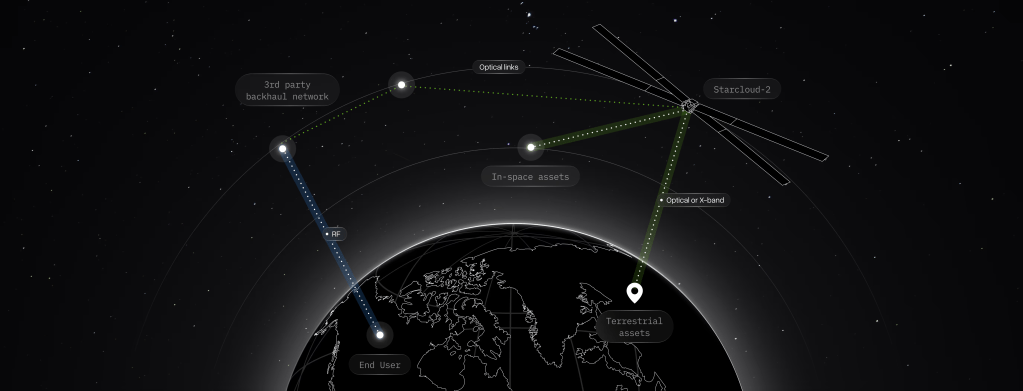
To make a long story short: they don’t make any sense, financially or technically.
Now, for the long story. I’m not super knowledgeable about datacenters or the tech industry, and I’ve never worked in it, but I do actually have a degree in aerospace engineering and I am quite familiar with that industry. I’ve been following it for a long time, I’ve spoken to people who work in it at various levels, and I have some amount of relevant experience.
So let me just say, from the get-go, that doing stuff in space is quite difficult. It’s a common saying that “space is hard”, although in my opinion this is mostly just a way for space launch providers to excuse embarrassing technical failures. But make no mistake, it is hard. Launching a kilogram of mass into Low Earth Orbit (LEO) is estimated to cost somewhere between $1500 and $30,500 depending on the vehicle, which is orders of magnitude higher than the cost of any other form of transportation. Rockets do fail periodically (the latest notable failure being perhaps the explosion of a Blue Origin New Glenn rocket during a test in May.
But that might not be an immediate issue. The main goal with space datacenters is to reduce the role that cost of land plays in the cost of building a datacenter and to trade in variable utility costs for an upfront payment.
Now, a space datacenter would likely reduce the cost of land, depending on the orbit it was built in. Nobody owns outer space, but certain orbits, like geostationary orbits that stay fixed over a certain point on the Earth’s surface, are regulated due to space constraints, and these slots can be very expensive, but at the moment there are few regulations about launching satellites into most orbits.
On the other hand, the idea of trading in variable utility costs for an upfront payment is nonsense on its face. Datacenters certainly do have certain variable costs. They need to pay for electricity, which can be extremely expensive and run into the millions of dollars per megawatt of datacenter capacity, and the proliferation of datacenters has led to a rise in the cost of electricity. If more datacenters continue to be built (a question beyond the scope of this post), then they will likely continue to drive up electricity prices as demand increases.
Additionally, datacenters consume millions of gallons of water to cool their hardware which represents an environmental harm as well as another ongoing expense for the datacenter. These ongoing costs are significant, and so it might make sense for datacenters to make upfront investments that will reduce their ongoing expenses.

And they already have been. Several datacenters have started using natural gas turbines for power to reduce their dependence on local electrical grids and other companies claim to be developing solar-powered datacenters, which is also what you’d likely be operating as an orbital datacenter. Similarly, other designs talk about closed-loop liquid immersion cooling, which is similar to what you’d be operating in space, and which is expected to reduce water usage considerably.
Of course, when you pay an upfront cost, that doesn’t mean that you are going to be getting free electricity forever. Even using solar panels, which do not require any material inputs to run, you will experience a slow degradation of your hardware over time, with modern commercial solar panels having an advertised lifetime of 25-30 years, during which they will experience a 20% decline in output.
Now, let’s compare the space environment. There, you do still need to worry a lot about cooling, but instead of being able to pump water through, you need to build radiators, which radiate heat away. I have seen a few news articles noting this as a positive for space—after all, radiating heat away doesn’t use water. This is true, but radiating heat is so much more annoying, from a technical perspective, compared to using convection cooling (the main method of cooling things when you have an atmosphere).
When performing convection cooling, you transfer heat into a fluid medium which then naturally rises away from the heat source, allowing new, cold fluid to take its place. This is why air conditioning condensers have fans on top, to help push hot air out and pull in new, cool air, and is the phenomenon that causes hot smoke to rise. In high-heat applications, it is common to use forced convection, where fluid is forced over the heat source—which is what is used in air conditioning condensers or in cooling computer hardware.
Radiative cooling, on the other hand, is based on the fact that objects emit radiation as a result of their temperature, a phenomenon called “blackbody radiation”. Higher-temperature objects emit more radiation, and radiation with narrower wavelengths, which is why very hot things can glow red hot. Most objects radiate away heat in the infrared range, which is also why thermal cameras can be used to identify the temperature of objects at a distance.
You can look at the equations if you like, but to simplify, radiative cooling has the key disadvantage that all the equations come with a constant called the Stefan-Boltzmann constant, which reduces the efficiency of radiative cooling by around a hundred million times. Radiative cooling becomes more efficient at high temperatures, but you can’t cool something at a higher temperature than the temperature you let it get to, and computer hardware prefers temperatures close to room temperature where convection cooling is far more efficient.
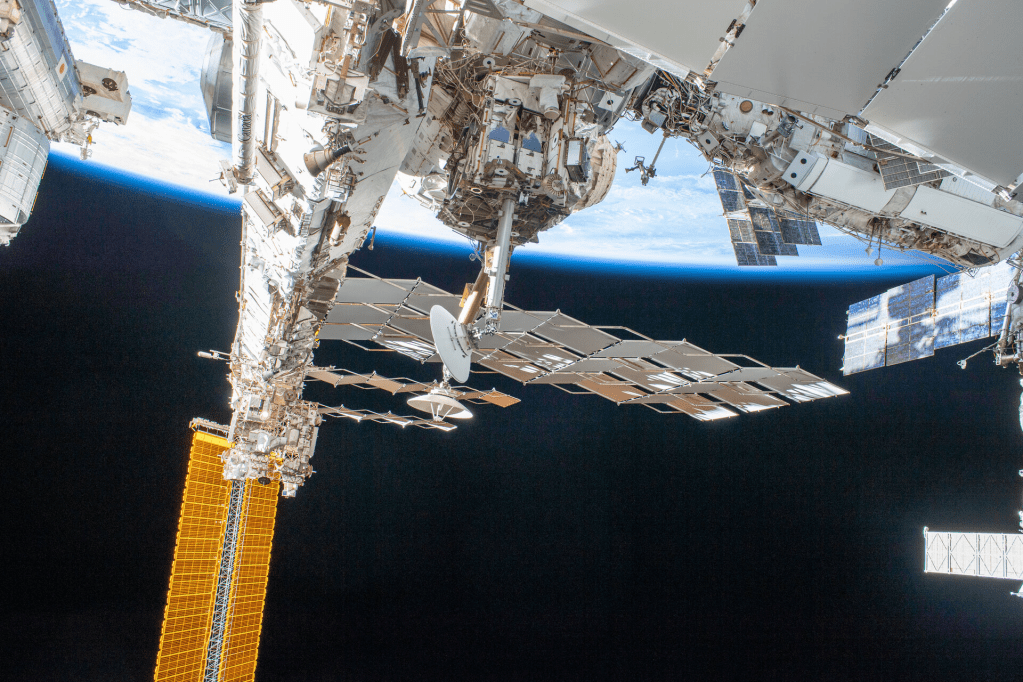
How inefficient is radiative cooling? Well, according to this article by SatNews, space datacenters would likely require 1200 square meters of radiator per megawatt of thermal power. Looking online, I find that modern radiators seem to be able to handle around 260 watts of heat per square meter, which would suggest a figure closer to 4000 meters per megawatt of computer power. In 2026, the average power draw for a datacenter was 4 megawatts , which would give a radiator size of 4,800-16,000 square meters—nearly the size of an American football field, on the low end, and far dwarfing the size of the ISS’s radiators—currently the largest set in space. (Note: the situation is actually somewhat worse than this blog post makes it out to be, because only a certain percentage of the electricity used is useful for computation and it’s not entirely clear to me what the wattage of a datacenter is calculated based on, so I’m just using the raw “4 megawatts” figure when in reality there would be additional heat due to solar heating and other systems and the power consumption would likely be somewhat higher as well, so consider these to be “best case scenario” figures.)
Heat management is a key challenge to doing anything in space, and these radiators add to the mass of any spacecraft, which also adds to its cost. There are also further challenges with the space environment, one of the most important ones being the high level of radiation, which tends to degrade electronics and is particularly problematic for modern computers (such as the GPU clusters used in datacenters) which have components so small that radiation events that displace individual atoms can meaningfully impair their performance.
Even assuming that the GPUs can be made fit for use in space at no cost (which is NOT the case), they are likely to experience much shorter operational lifetimes—in addition to the threat of obsolescence which is already a problem for terrestrial datacenters. The solar panels on a spacecraft are generally expected to wear out faster, with the ISS’s new set of solar panels (installed in 2018, to replace solar panels from the early ‘00s that had been breaking down) expected to last for around 15 years, or half as long as terrestrial solar panels. These solar panels are, of course, not cheap, either, with the ones on the space station costing around $16 million each and providing 20 kilowatts of power each, or around $1.25 million dollars per kilowatt of power, coming to $6 billion (!) for a 4 megawatt datacenter. For the purposes of this analysis, I am assuming that this spacecraft flies on an orbital trajectory that keeps it in sunlight at all times (called a Sun Synchronous Orbit).
To compare, at the highest industrial power cost in the United States of 33.17 cents per kilowatt-hour, this same datacenter would cost $331.70 per hour in electrical bills to operate, and per year would cost a little less than $3 million, and over a (very optimistic) operational lifetime of 15 years would only cost $45 million, or more than a hundred times less than the cost for the solar panels of that space based datacenter alone. Of course, the roll out solar array is only the best solar system that we have in space right now, and it is likely that major investment could lower its cost by several orders of magnitude. Let’s set those price figures aside, and just note that each solar panel has a mass of 600 kilograms, or around 30 kilograms per kilowatt, or 120,000 kilograms for a 4 megawatt datacenter.
Now, let’s come back to radiators. Space companies are unfortunately tight-lipped with the prices of many of their components, so we cannot directly estimate the cost of radiators, although I would suspect that the cost per watt of radiators is at least as high as that of solar panels, which doesn’t bode well. But looking at the same radiator from earlier we can see that it lists a mass of 0.14 kilograms in total, giving around 11 kilograms per kilowatt, for a total mass of 44,000 kilograms of radiator for a 4 megawatt datacenter.
Now, adding these numbers together, we see a total mass of 164,000 kilograms for a 4 megawatt datacenter, not including the datacenter itself, which would certainly add significantly to the mass of the project. But even there, at the lowest currently-available per-kilogram launch cost, this comes out to $246 million in launching only the added mass of the solar panels, which is still more than five times the cost of utilities over 15 years. And this is all using numbers that are as favorable as possible for the space-based datacenter.
Now, what if utilities costs get more expensive? That is a plausible outcome, given that datacenters account for more than 4% of US electricity consumption, so it’s possible that the figures for electricity costs of our terrestrial datacenter could increase. It is implausible that they could quintuple within a reasonable timeframe, but even if they did, it would almost certainly still be cheaper to build a datacenter on Earth and build a powerplant to support it.
According to Lazard, the levelized cost of energy for solar with battery storage ranges from $50-131 per megawatt hour, giving a cost between $4,800 and $12,576 per day for a 4-megawatt datacenter. This is the cost to the utility, not the cost to the end consumer, so it is reflective of the approximate costs if the datacenter were to build its own solar farm, but even at higher consumer costs (listed at a maximum of $217/MWh) the datacenter would cost $20,832 per day. Over a fifteen year lifespan, this gives a worst-case-scenario utility cost over 15 years of $114 million, which is still less than half the price of launching only the power systems needed for space datacenter.
There is essentially no scenario where it makes sense to build a space-based datacenter on purely economic merits. There might be some value in having that high powered computational resource available for edge computing in space, but if a company is saying that space datacenters will drive the development of space infrastructure, they are mistaken.
 J. E. Landau
Leave a comment