What comes after the internet as we know it? It’s almost unimaginable at this point to think that we could see a future without the internet as we know it, but it’s easy to discuss an internet that has evolved to the point of being unrecognizable.
Somewhat recently, a family member asked me what I thought would come after the internet, and I think that there are a few ways to think about this issue depending on how we conceive of the internet and define it.
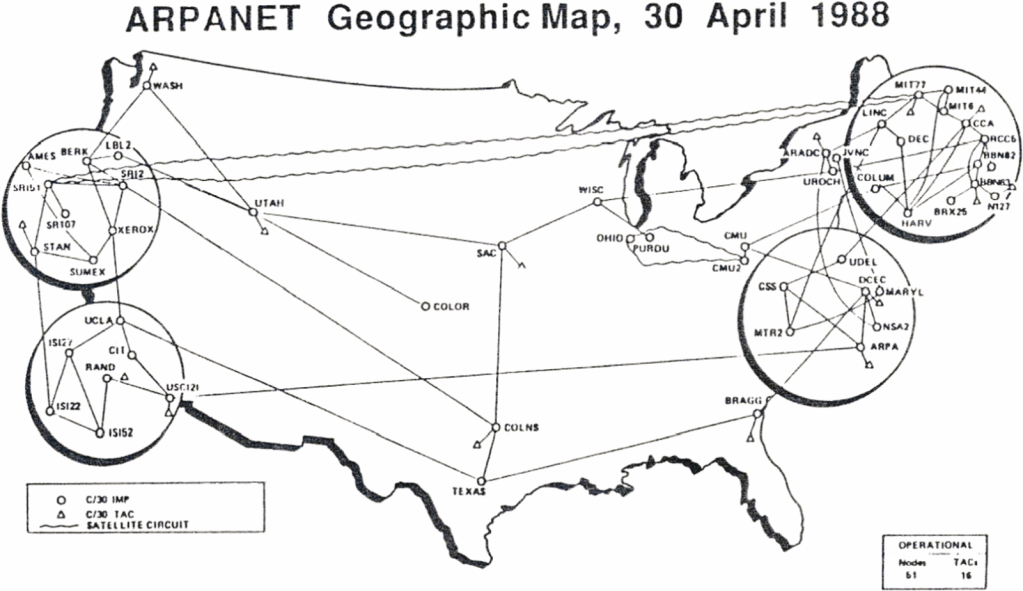
Technically, the “internet” is a specific set of protocols that mandate how the world’s computers can talk to each other and forward messages around the world, and the network that is based on them. From this point of view, we can say that the internet specifically began, as usually stated, with ARPANET in 1969 or slightly earlier with some precursor systems in that same decade and went global in the 70s and 80s.
If that’s the definition of the internet we use, the “end of the internet” would probably mean an apocalyptic event, where these global telecommunication networks can no longer be operated, or perhaps a massive political upheaval that changes the world’s relationship to the internet. Much has been written about the negative impacts of the internet on mental health, politics, and (according to some) the economy and so these factors might be reasons to voluntarily phase out the internet or the causes of a violent revolution that destroys the internet, such as Dune’s “Butlerian Jihad”. In this case, the world could see a radical anti-technology movement that could have impacts in other fields like medicine and agriculture or a more moderate political situation that embraces a cautious attitude towards technological innovation without rejecting unambiguously positive aspects of technological development.

From that same perspective, it’s also possible that the use of the internet could become untenable due to non-apocalyptic but unintentional factors. Recently, many online commentators have been discussing something called “dead internet theory” which proposes that artificial intelligence chatbots might be responsible for a majority of online content and interactions. If things continue on the same trajectory it’s possible that users could stop interacting with each other at all online, instead experiencing generated simulations of what online activity might look like that have nothing to do with real communication. Instead of actually doing online shopping, users interact with a simulation of online shopping while predictive algorithms guess what they might want to buy without the two sides of the equation ever connecting.
Alternatively, given the large number of cybersecurity vulnerabilities that have been discovered, it is possible that the internet could become unusable due to computer viruses and infrastructure failures. This is something that has been depicted in the tabletop and computer game series Cyberpunk. There, an event called the “DataKrash” destroys the global internet, although an “old net” exists, inhabited by dangerous artificial intelligences.
What about going further? I think that focusing too much on a strict definition of the internet limits what the post-internet could look like. Instead, we should consider the internet as just “any global communication system”.
In that case, the internet is much older than the 20th century. Depending on what counts as “global” and “communication”, the internet might stretch back to the age of sail, where empires stretched from Europe to the Americas in the colonial period as early as the 16th Century, or even further back to the very beginnings of civilization, where trade networks linked Rome and China to connect most of the Old World.
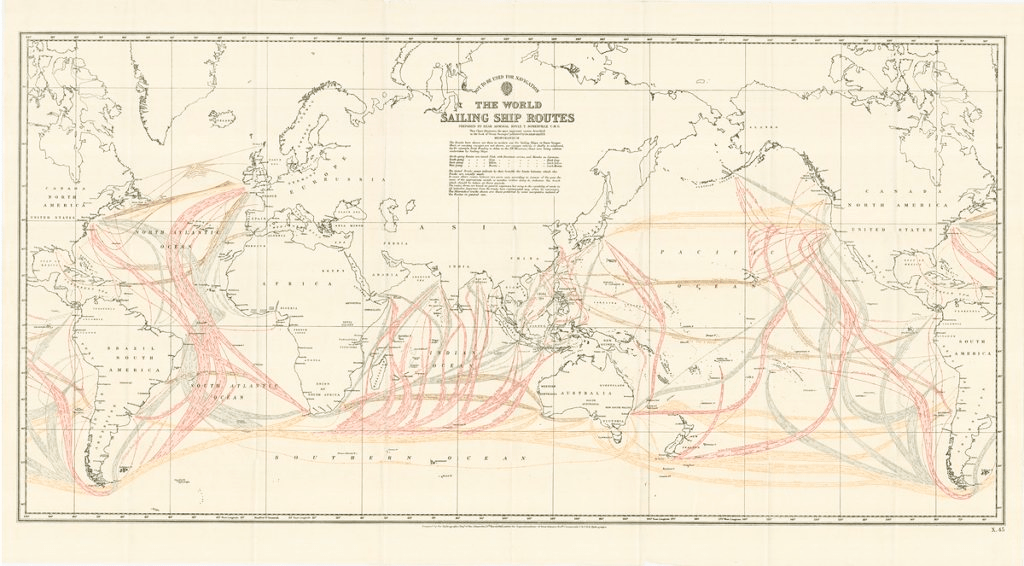
In this conception, global communication networks were a much earlier development, and we are already living in the post-internet. Whatever your “first internet” is, it already went through several iterations. Let’s start at the age of sail as our “first internet”. Compared to the Silk Road, it was truly global, because it allowed for contact with parts of the globe outside of Eurasia and would eventually link all continents including Australia and Antarctica, which were previously undiscovered but which would be made accessible by sail in the 17th and early 19th centuries, respectively.
Once the world was connected with sailing ships, it was not long before limitations in this system were recognized. Voyages by sea could take months, and could be quite dangerous, which made it difficult to effectively administer an empire overseas without significant delegation. To help speed up the movement of information around nations, the optical telegraph was invented. This used a series of towers with moving arms to send signals over long distances before the proliferation of electrical technology. The optical telegraph emerged in the late 18th century, although it was first contemplated in the 17th. It allowed for a higher rate of communication, but had many drawbacks and was never widely proliferated.

This was then followed by the creation of the far more famous electrical telegraph in the 19th century, which went global in 1866, when the first successful telegraph link across the Atlantic ocean was established. This could be considered the “second internet”, since it was the second global communications network, and allowed for people to send messages across most of the world and at the very least between continents.

Then, the telephone was developed in 1876, although the inventor is a subject of some contention. According to Wikipedia, there were more than 100,000 telephones in the United States by 1881 and the first intercontinental telephone service would be established in 1927. This new internet, capable of transmitting not just text but audio, is thus the “third internet”.

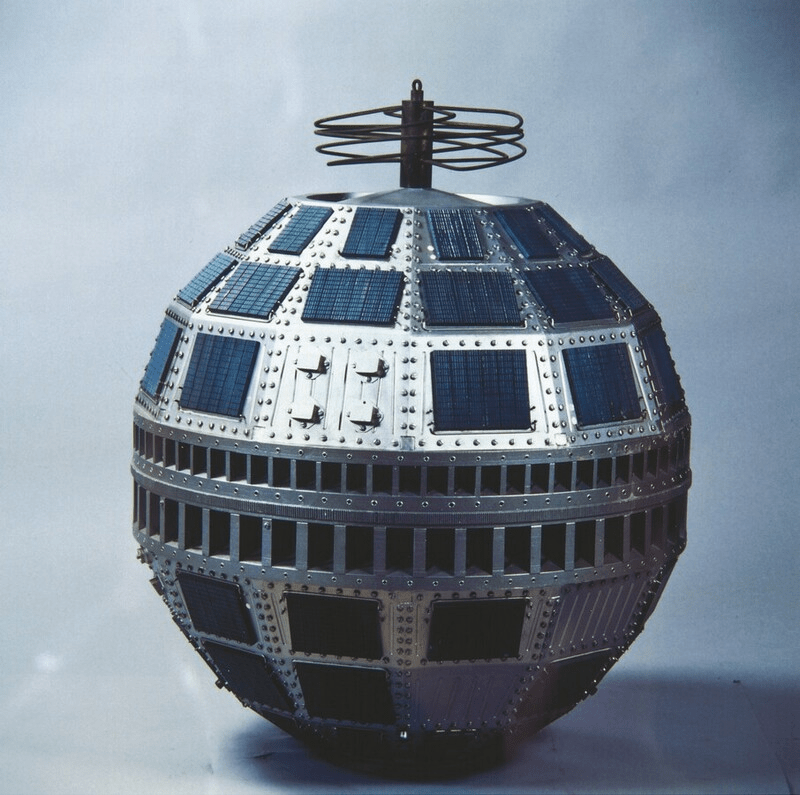
After audio came video. The first electric televisions came about in the 1880s and the first broadcast was carried out in 1926. Cable television networks were available as early as 1936 and in 1962 the Telstar satellite broadcast a signal from the US to Britain, establishing the “fourth internet”.
The system we have today could then be called the “fifth internet”, and it can transmit information of theoretically any type around the world. From this perspective, the next question is, “what could the sixth internet be?”
I think that the earliest proposal for the 6th internet might be a sort of New Age “melding of minds” around the world. This would be a direct communication network, and the idea is quite old. I somewhat recently read The Consciousness of the Atom by Alice A. Bailey which in 1922, very ominously, said that “there is a stage in which we can transcend time and space, when the consciousness of the group in all parts of the planet, for instance, will be our consciousness… there are also units of the human family who are passing into the second staage… they influence other forms and are becoming group conscious.” This is, of course, only a pseudoscientific recapitulation of older spiritual ideas, such as Hindu panentheism. Hive minds and the fusion of all of humanity into a single entity is a somewhat popular science fiction topic, such as in Arthur C. Clarke’s Childhood’s End or the recent TV show Pluribus.
While most of the explorations of this concept have been fantastical, there have been some real-life experiments in linking people’s brains directly and brain-computer interfaces could allow for some serious direct connections between people!
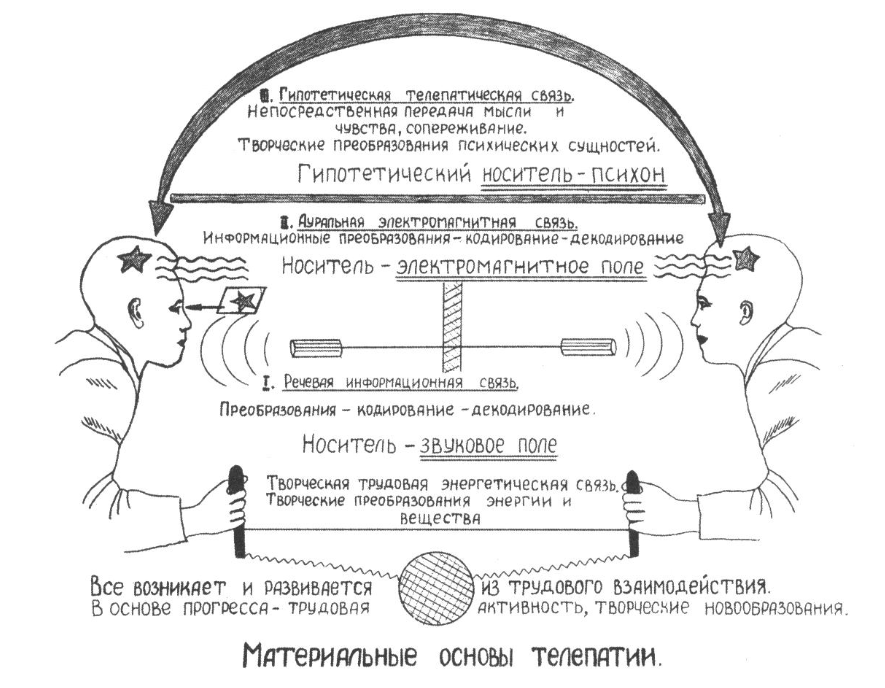
Of course, these technological means of connecting people might not count as a sixth internet. After all, although the type of information being transmitted is novel, the actual physical infrastructure underlying a couple connecting their brains over the internet is still the internet as we know it today. Something based around psychic powers or the noosphere would be a better contender, but science as we know it does not have any clear mechanism for these things to operate over.
Alternatively, a sixth internet could be an internet that works similarly to today’s internet, but which has a very different physical mechanism. One proposal I have seen is that all devices could form a massive global mesh network, relaying signals around the world, as in the tabletop RPG Eclipse Phase. This, of course, has massive security and logistical challenges, and might struggle to bridge the gap between continents. Another interesting science fiction idea for a “sixth internet” is the “metaplanetary network” or met from the novel Metaplanetary, which is composed of living nanomachines that physically stretch between planets and can carry signals between them. Interestingly enough, these nanomachines can also carry matter, and are the main means of transporting people around the solar system.
While I do not think that something like the met is likely to be built in real life, it does bring up another possibility for what the post-internet could be: networks that transmit different kinds of things. The internet we have today exists to transmit information only, so what would networks look like that can transmit energy or matter?
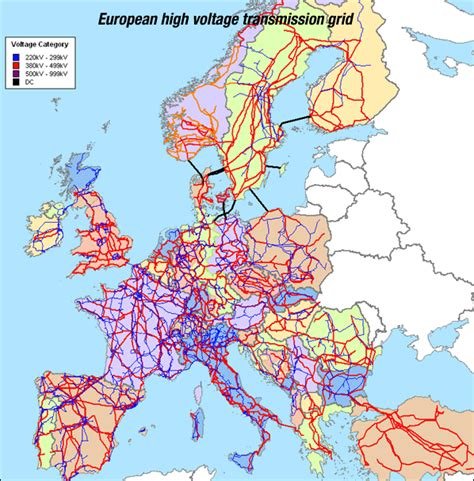
We already have those networks. For energy, we have the electrical grid, and the world’s electrical grids are gradually being linked together. Europe, for instance, has already begun this project and a similar project exists in southeast Asia. The electrical grid can continuously deliver electrical energy to your home through a cable. But people have always needed energy in the form of food and fuel.

This gives rise to a new perspective, where we can see things beginning with a discrete system for physical goods transportation that also transports information and energy and then information and energy becoming continuous-supply goods with their own infrastructure. Once upon a time, energy was transported in the form of coal and fuel not only to power plants but to people’s homes directly (as it still is in many areas) and information was primarily delivered in discrete quantities in the form of mail.
From this perspective, we can see that we already have continuous-supply physical goods networks for things like water, gas, and sewage, which are pumped around directly to and from peoples homes. Petroleum is also pumped over huge distances with pipelines, including some that stretch across seas, although so far there are no intercontinental fuel pipelines that would allow these networks to qualify as an “internet”.
Perhaps the future of the internet is in greater global integration of goods supply, with more goods becoming continuous ones. Perhaps in the future people could have plumbing for food, clothing, and other essential everyday goods—although the logistical and sanitation challenges involved in having food plumbing in your home are rather horrific. If nanotechnology becomes good enough to directly fabricate goods, the future could see plumbing for basic chemical elements like carbon, hydrogen, and oxygen, which an appliance can turn into whatever one wants. This sort of future is discussed in Neil Stephenson’s The Diamond Age, where molecular assemblers are found in even the homes of the poorest people.
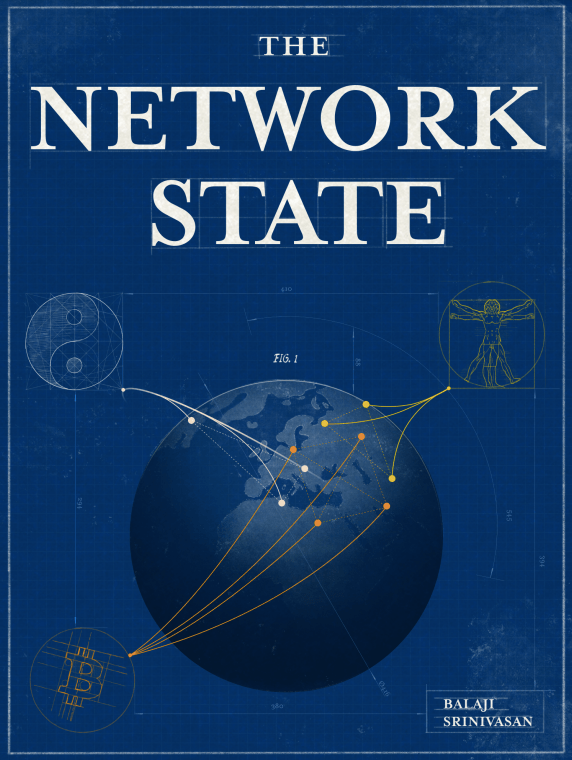
The Diamond Age is also notable because it features a decentralized society, something which was discussed extensively in Stephenson’s earlier novel Snow Crash, where America has broken into thousands of tiny microstates. Perhaps this sort of decentralized governance is something that could be treated as a “post-internet” as well. Balaji Srinivasan, tech industry entrepreneur, wrote a novel called The Network State, which has a similar proposal for the future of governance.
Instead of nations having defined borders, they have defined communities online, with their own cryptocurrencies, organizing in a decentralized way over the internet. Your web nation might own part of a condo complex as sovereign territory, along with a chunk of land and some seasteading platforms. It could sort of infest the traditional states of the world and then hatch out from them, a possibility discussed extensively by Gil Duran’s The Nerd Reich.
Like many of the other post-internet proposals, this one is somewhat troubling. A world of governments that work like corporations does not appeal to me, but it’s possible that things could be much more pleasant. Instead of corporate network states, existing nations might seek to make their democratic processes more continuous and accessible. Some of these proposals, like electronic direct democracy and futarchy have serious issues, but it is likely that more positive ones will emerge.
In The Quantum Thief, by Hannu Rajaniemi, there is a city called the Oubliette, where residents use advanced cryptography to take strict control over their personal privacy, to the point that they can be invisible to others. Perhaps in the future, people will be able to use internet technology to achieve similar degrees of personal control over their own civil liberties.
This could also be another direction for the future of the internet, where instead of broadening the spread of information, cryptography and privacy become more central to the way the people use telecommunications. Some internet protocols, like onion routing, are designed to be more secure over large numbers of hops through a network. Future thinkers will likely come up with even more secure ways of using the internet. A world where surveillance of digital information is impossible is almost unimaginable to us, but it could lead to a very different society.
As science fiction writers, I think that there is a tendency to take the internet as it exists and assume it will continue in its present form indefinitely. Books written before the internet age often completely ignored the impact it would have on society, because they failed to predict it, while those written at different ages of the internet tend to reflect the mores of that time, such as Cory Doctorow’s Eschaton novels having a freewheeling early 00s internet or Metaplanetary having a monolithic future internet that works more like cable news.
Instead, I think that it’s important for science fiction writers to consider how the internet could transform, how current trends will continue and change, and how people will relate to technology in the future.
It’s an impossibly broad goal, but given how much the internet has become central to our lives, one of the most important topics for sci-fi to cover.
 J. E. Landau
Leave a comment