Recently, there has been some discourse about cosmism, both in the space community and outside of it. I listen to a few space-industry podcasts, and Casey Dreier from the Planetary Society is a usual guest on a few of the shows I listen to. One thing that he occasionally brings up is the idea of cosmism: that going to space could solve the problems on Earth and refine humanity. And he is quite critical of this idea.
He’s not the only one. This sense of the word “cosmism” is also found in the discourse around TESCREAL, an ideological package associated with Silicon Valley by a few thinkers, originally Timnit Gebru and Emile Torres. TESCREAL stands for transhumanism, extropianism, (modern) cosmism, rationalism, effective altruism, and longtermism, and if you ever hear someone like Sam Altman talk about filling deep space with computer hardware to run incredible numbers of computerized intelligences, that’s about the sort of thing you’re hearing.
Now, there is a whole lot of baggage with TESCREAL and there are a lot of ideas about where these ideas come from and what they mean. I am not very fond of TESCREAL-ist thinkers but I do think that the idea that they all come from some evil place is probably not accurate either. Here, I am just going to address what Torres and Gebru call “(modern) cosmism”, and the “(modern)” is always in parentheses.
Why is this?
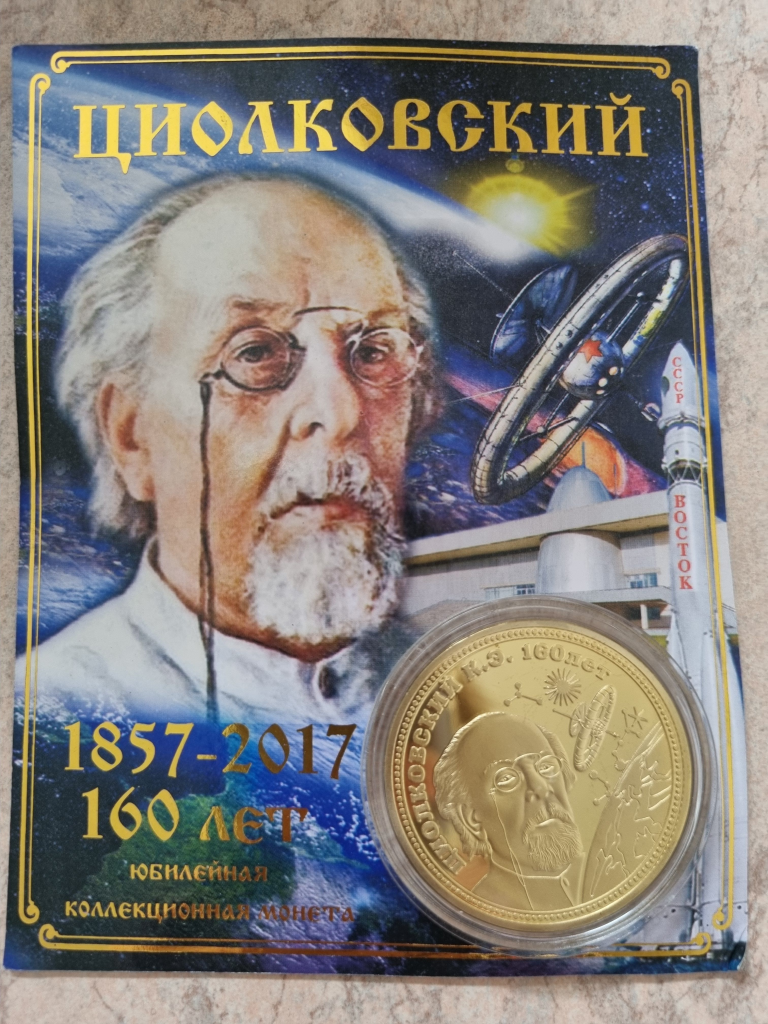
Cosmism is a fairly old set of ideas, famously (to me) associated with the 19th century Russian rocketry theorist Konstantin Tsiolkovsky, who wrote that “the planet is the cradle of mind, but one cannot live in a cradle forever.” (Often quoted with “Earth” in place of “the planet”.) The Russian cosmists were an optimistic bunch, who believed that humanity would master science and become perfected by doing so, traveling into the cosmos, achieving immortality, and finding some kind of personal enlightenment. Tsiolkovsky did some of the important math for determining the amount of fuel a rocket needs, and he also proposed the concept of the space elevator. Other cosmists were more artistically and philosophically inclined.
Cosmism feels entirely in place in the intellectual climate of the beginning of the 20th century, before the world wars. Things were improving at an incredible rate, with the invention of the airplane, the development of exciting new medical and industrial technologies, and the electrification of the world. The first world war would dash many of these utopian hopes, but the Russian Civil War and the rise of Lenin’s Soviet Union would promote the idea of utopianism in Russia, and thus the ideas of cosmism. After the optimism of the Lenin period, Stalin would replace him (after some consternation) and this would make for a much less optimistic Soviet Union. Of course, the Lenin period had many atrocities committed by the Soviet government, but Stalin certainly brought about an era of fear that did not exist before him, at least, not for most of the Soviet people.
After the Second World War, many of these cosmic ideas would not go away. In the US, the 30s and 40s would see the rise of science fiction into the popular consciousness, with the Golden Age of Science Fiction involving the greats of the genre, such as Heinlein and Asimov. Now, despite popular assumptions, these authors did not imagine a perfect future for humanity in outer space. Heinlein imagined lots of suffering and struggling, and although his Space Trilogy is idyllic, it also is very similar to more traditional seafaring stories and covers the experiences of fairly ordinary people working in sometimes dangerous jobs. His later books would cover war and conflict in space.
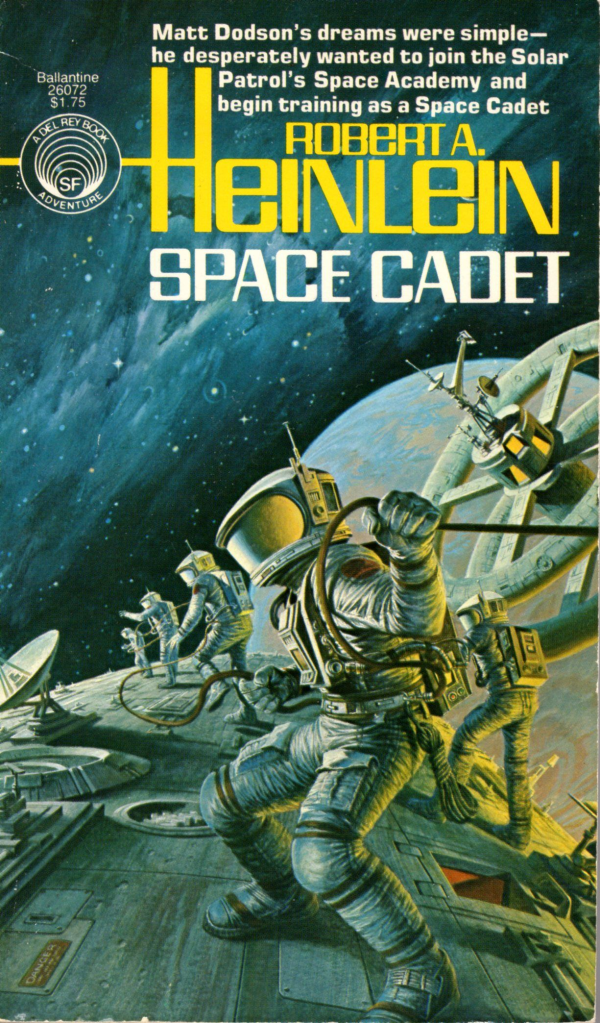
But, nevertheless, they also discussed the wonders of space exploration and the natural beauty of space, as well as the beauty of human civilization in space. Asimov’s Robots stories are mostly about machines working and living with humans, and the ways that their strict moral codes can conflict, but a few, like Runabout, discuss robots working in deep space environments and encountering dangers there, but also great natural beauty. In Heinlein’s stories where teenagers to go Mars and Venus, such as Between Planets, these planets are depicted as being wild and beautiful in their wildness and unexplored beauty.
But that doesn’t mean that these authors shied away from conflict in space. In that same story, Between Planets, Venus and Mars are involved in an anti-colonial struggle against an oppressive government on Earth. Asimov also covered conflict in space in his Foundation stories, and the Robots stories aren’t all pleasant, either. So the idea of space as solving human conflicts isn’t exactly seen in these science fiction stories. But, the natural beauty of space is discussed heavily.
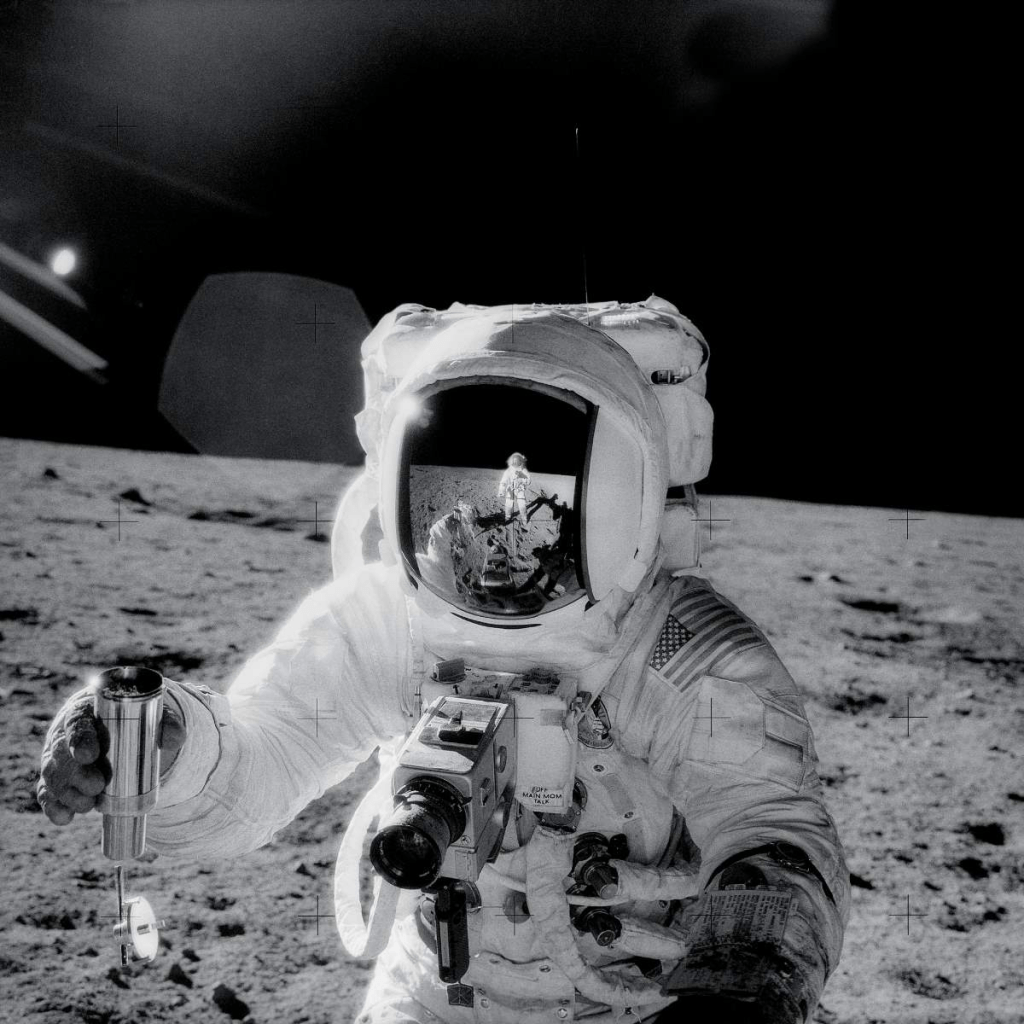
And I think that advances in astronomy in the 20th century were key to this. Starting in the 50s, nations began sending satellites and people into space, and astronomy started to involve deep-space probes and space telescopes, although these wouldn’t reach their zenith until the 60s and 80s with the deployment of the Hubble Space Telescope and the Apollo landings, irrespective. People could see nebulae and galaxies, the craggy surfaces of the moon and Mars, and I think that there is something deep within everyone that sees beauty and feels some amount of longing for those desolate worlds. The natural beauty of space is readily apparent.
And, really, technology is not needed to see this beauty. People all around the world have assigned great beauty to the skies since ancient times. Astronomers have assigned different stars to constellations, and religious thinkers have timed their holy days by the moon and the stars, or assigned significance to those points of light in the sky, all around the world.
Indeed, modern people might be some of the least cosmic. Although we have photos from the surface of Venus, many people live in areas with such bad air and light pollution that they cannot see the morning star, the brightest object in the sky after the sun and the moon. In other places, SpaceX’s Starlink satellites have joined the stars in the sky. We are more isolated from the natural beauty of space in our everyday lives than any people in history has been, but we also have greater access to space in a technical and direct sense.
And this leads me back to the original point of cosmism. I believe that the (modern) cosmism referred to in TESCREAL has its roots in the New Age, Star Trek, and Carl Sagan.
The New Age is how modern cosmism can be traced back to the original, Russian cosmism. Thinkers like Tsiolkovsky operated in an environment suffused with new ideas syncretizing scientific and spiritual thought. Helena Blavatsky operated in the Russian Empire in the 19th century, with her Theosophical movement playing with many of the same ideas as Tsiolkovsky. These ideas would languish in obscurity for a long period of time, but esoteric and occult thought would explode into the mainstream in the 1960s with greater interest in ideas from the Indian subcontinent syncretizing with existing thinking in Western occultism and esotericism.
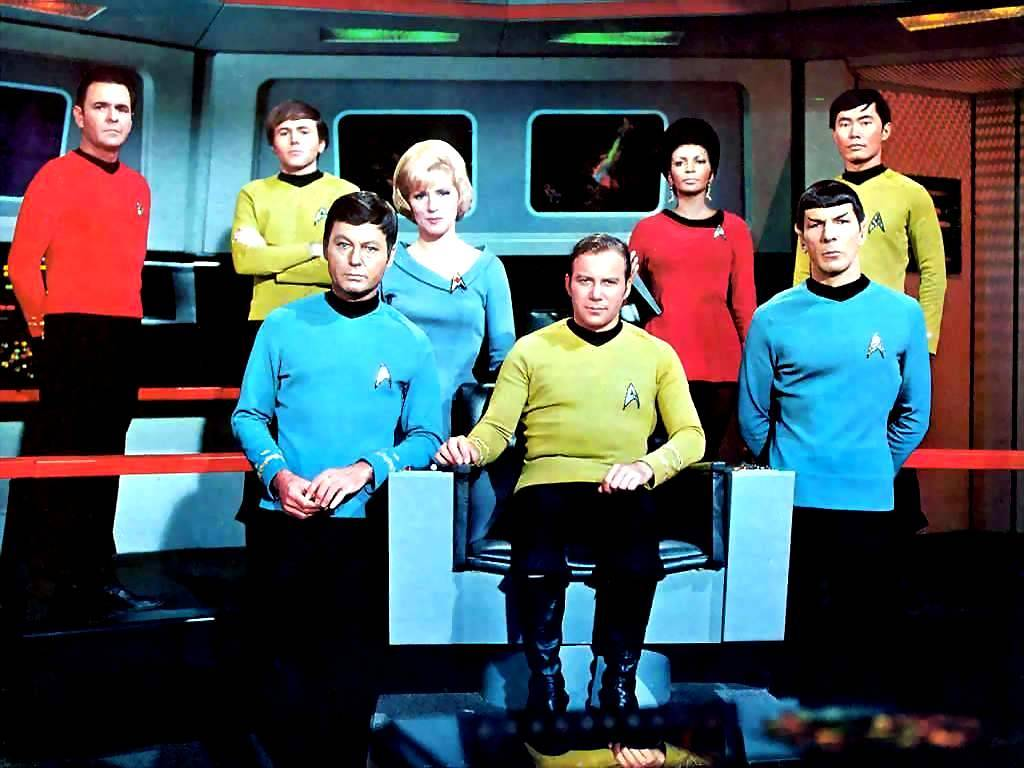
In this period, ideas like astrology would become mainstream again, bringing attention to space. And, at the same time, science fiction would take a much more optimistic turn with the release of Star Trek in 1966.
Gene Rodenberry conceived of Star Trek as a way to depict a future without many of the issues afflicting the United States in the 60s. In particular, Rodenberry hoped to show a world without racial or class divides and without poverty. It is also a highly technologically advanced, spacefaring utopia and the show takes place in deep space, exploring the cosmos. It’s easy to see a connection between a rise in modern cosmism and the creation of Star Trek. Figures important to TESCREAL such as Elon Musk and Jeff Bezos have expressed strong opinions about Star Trek. More intellectual figures in the movement usually reference more niche pieces of science fiction, like writing by Neal Stephenson (also a favorite of Bezos) or Vernor Vinge.
Finally, Carl Sagan. It’s probably overly specific, but he was the “pale blue dot” guy. He emphasized the fundamental unity of human life in the cosmos and the need to explore space for the betterment of all humanity. He also was involved in the creation of the Voyager Golden Record, which was intended to give a positive impression of humanity to hypothetical future alien encounters.
Carl Sagan was also the creator and lead personality in a popular science show called Cosmos that premiered in 1980. The name isn’t a coincidence, either. Cosmos spends a fairly large amount of time talking about the relative insignificance of earthly civilization, the beauty of space, et cetera, et cetera. And I believe that all of these things influenced a rise in modern cosmism.
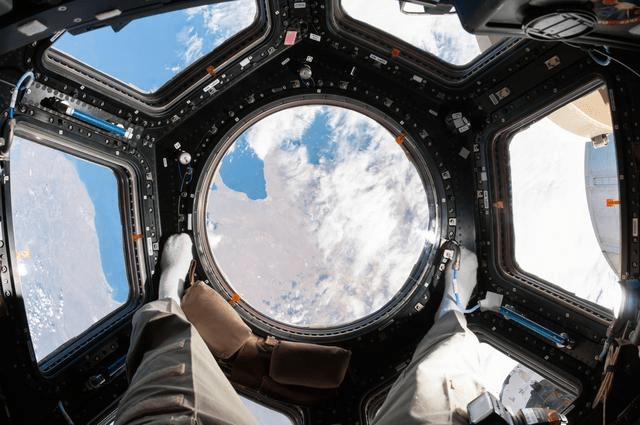
There are some other possible factors. Some astronauts and spaceflight promoters have talked about an “overview effect” where people traveling in space look down at Earth and understand the interconnectedness of all life. There is some controversy about whether or not the overview effect is real and there haven’t been that many astronauts, but a lot of people pay attention to what they say about their experiences in space.
But I’m not sure that cosmism actually has all that many roots in science fiction. Or at least, not in a good understanding of science fiction. Even these works that seem to promote cosmism or have promoted cosmism do generally stay away from mortal perfection.
Star Trek, for all of its transcendent values, still covers ordinary human suffering. The Federation is not a perfect society, and it has secret police, it fights wars, and it doesn’t have immortality. The Federation of Star Trek also has strong prejudices against transhumans, which isn’t so TESCREAL.
Jeff Bezos, noted fan of Star Trek, also funded the production of the TV show adaptation of The Expanse, where all the ills of living on Earth today are exported across the solar system, including racism, classism, and war. The show does also spend a fair bit of time on the beauty of outer space, contrasting it with death and violence, but it doesn’t seem to be pushing the idea that traveling to space has any effect on the moral character of humanity.
For a work that fits much of the rest of TESCREAL, Greg Egan’s Diaspora clearly rejects the value of cosmism. Only a small portion of the broad, transhuman civilization depicted in the setting travels far into space at all, and they don’t seem to be interested much in anything more than scientific discovery. The people who care at all about space are treated as incredible deviants, with most of the civilization being wrapped up in deep solipsism, and once they reach the end of time, the surviving protagonists immediately go back to their usual pursuits, or commit suicide.
In fact, I think that cosmism conflicts a little bit with telling compelling stories in space. Stories are about conflict, and nastier conflicts are generally a bit easier to write. Obviously, this isn’t a hard and fast rule, but it’s hard to tell a space war story without wars in space, or stories about greed or lust, if human nature is fundamentally improved by space travel.
Even some stories where the nature of intelligence and life changes in travel through space, such as Vernor Vinge’s Zones of Thought don’t necessarily depict this as a good thing. In A Fire Upon the Deep, the galaxy is threatened by the spread of a superintelligence called “the blight” and more advanced civilizations where higher levels of intelligence are possible are just as bloodthirsty as everyone else.
How valid are these ideas? In real life, a few astronauts have been accused of crimes. Although reports of the first crime in space, allegedly committed by Anne McClain, have been discredited, Buzz Aldrin famously punched a flat earther and I once saw a retired ISS astronaut nearly get into a fistfight with a different moon landing conspiracy theorist at a university event, although I won’t say who since I don’t want to get anyone in trouble. More seriously, in 2007, former astronaut Lisa Nowak was charged with attempted murder and later pled guilty to lesser charges.
I don’t want to speculate on the character of real-life astronauts, and many of these cases were either discredited or not found to be especially serious, but given that some crimes were committed by astronauts returning from space, and astronauts are selected partly to serve as PR people and for their ability to work together. To me, this indicates that going to space probably doesn’t make people less violent or more moral. And I don’t think that sci-fi writers think that, either.
So who does?
I’m not sure, honestly. I see these sentiments reflected, sometimes, by very enthusiastic National Space Society type space advocates and industry watchers. Casey Dreier talks a bit in his various appearances about space fans expecting for space to provide some kind of spiritual refinement, and he speaks derisively of this. Dreier works for the Planetary Society, which is an organization that advocates for unmanned space exploration exclusively and which generally opposes the industrial use or settlement of space.

But the Planetary Society was founded by Carl Sagan, and they have a lot of his ethos. When they talk about space, they have the same visionary enthusiasm that TESCREAL people do, but instead of talking about quadrillions of computer people or turning mercury into solar panels, they talk about exploring the solar system for science, and looking for life for the inherent betterment of humanity, without any clear causal link. In truth, I think that they are cosmists themselves.
 J. E. Landau
Leave a comment