Recently, I read the novel Seawitch by Alistair MacLean. It was a piece of extruded thriller product from 1977, about a professional terrorist trying to destroy an oil platform owned by the wealthy and disciplined Lord Worth, and it gets pretty ridiculous. Right at the beginning, Worth steals a bunch of military hardware without any real trouble at all and flies it out to his oil platform, the titular “Seawitch”. And the book really lavishes a lot of description on these.
First, the book starts off by describing the Seawitch, explaining that it is a first-of-its-kind “tension-leg platform” or TLP, which I found out was actually a real kind of oil platform. Then, it talks about how it was made from reinforced concrete specially designed by a “Dutch engineering group”. We hear a lot about the specifics of pumping oil and then moving it to a special storage tank and then passing it on to a set of three ships. Some of this is pretty relevant—the terrorists work to attack the operation by hitting two of the tankers in transit, and holding one for ransom, and it’s good that the author spent a lot of time describing the oil platform.
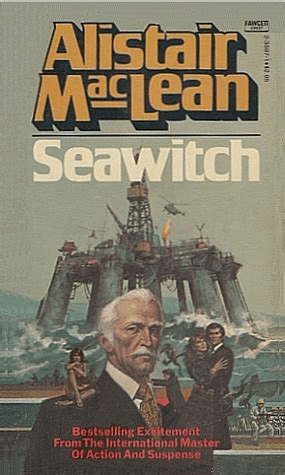
Other choices are a bit more baffling. The terrorists end up stealing some small nuclear weapons from an army munitions depot, something that they have basically no problem in doing and which takes about five highly-competent goons and little else. Then, the audience is treated to extremely detailed, multi-paragraph descriptions of how the nuclear weapons work and are used on two separate occasions, one of which contradicts the other, and this really primed me as a reader for those mechanisms to be important. In particular, they talk about ways to defuse the nuclear warhead. This does not happen.
And so, what purpose does this description serve?
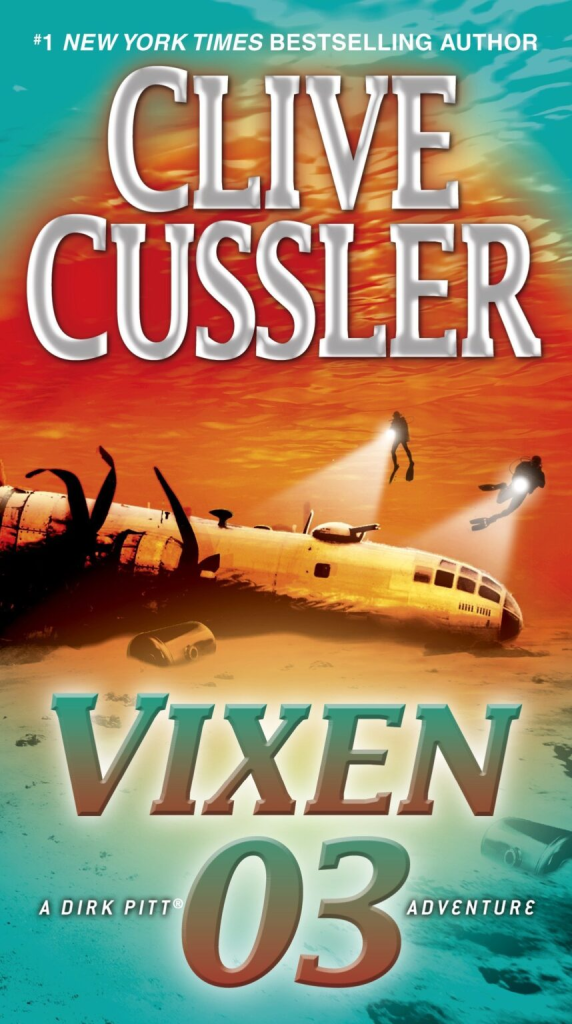
Well, it’s certainly a common convention of the genre. A few months ago, I read Vixen-03 by Clive Cussler, which I enjoyed quite a bit more. The protagonist was just dripping with smarmy Chevy Chase charisma that really made his constant womanizing much more tolerable, and the stakes were a lot clearer. Seawitch had at stake a single oil platform, and a few dozen people were killed and a nuclear weapon was detonated about it. In Vixen-03, there’s a horribly deadly and persistent bioweapon that might be released in the United States, which seems a lot more significant and really justifies all the violence. But it has just as much technical description.
Part of the villain of Vixen-03’s scheme is to refit a scrap battleship to deploy a bioweapon on American soil, and as a part of this the audience is treated to extremely detailed descriptions of the battleship, especially once it starts sailing up-river and firing at different targets. And there, the description is a lot more welcome, perhaps even enhancing the action. Because, without the description of exactly how far a bomb blast penetrates into a ship, the audience cannot know what that means, and without describing the exact chain of command for firing the ship’s main guns we don’t get the tension of wondering whether or not the deadly bioweapon shells will be launched.
I think that this is actually pretty similar to the description that’s used in a lot of good science fiction novels, in a time-honored tradition as old as the genre. In The Most Able Man in the World by Edward Page Mitchell we are treated to detailed descriptions of the mechanical mind of Baron Savitch and in Jules Verne’s 20,000 Leagues Under the Sea we get quite a bit of technical detail on the ship. In these novels, the descriptions are used to enhance the wonder of the fantastical machines.
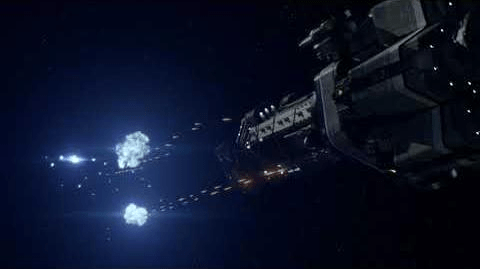
In more recent science fiction, these technical descriptions can be used in similar ways to Vixen-03, such as in The Expanse where the audience is treated to fairly detailed explanations of the mechanisms involved in space combat, as well as their limitations. This allows for the author to create tension, instead of just saying something abstract like “the PDCs were firing to intercept incoming missiles” the audience can be treated to a whole sequence with tension and uncertainty.
Andy Weir also does a fair bit of this in his writing. All three of his popular novels, The Martian, Artemis, and Project Hail Mary all include serious technical exposition. This is both a strength and a weakness, because a lot of these technical lectures are important to the plot but it can also make the books overly didactic at times.
Some critics have said that it is possible that Weir mostly does this to help cover for his dialogue. Artemis is usually considered to be the weakest of his three more popular books and it is also the one with the most dialogue between the characters. The Martian and Project Hail Mary do have some limited in-person dialogue, but most dialogue is done through computer terminals or other means that slow it down and make more unnatural conversation feel better. It’s a good patch for a difficulty writing dialogue.
And it’s a good patch when you’re playing for time. Writing technical exposition is, in my opinion, very easy to do well and quickly, because people and emotions can be a fair bit harder to work on. I think that if you are not a good author (and I am not claiming to be one, I’m definitely guilty of this sometimes) expositing for a while is a good way to filibuster instead of getting worthwhile writing done that advances the plot.
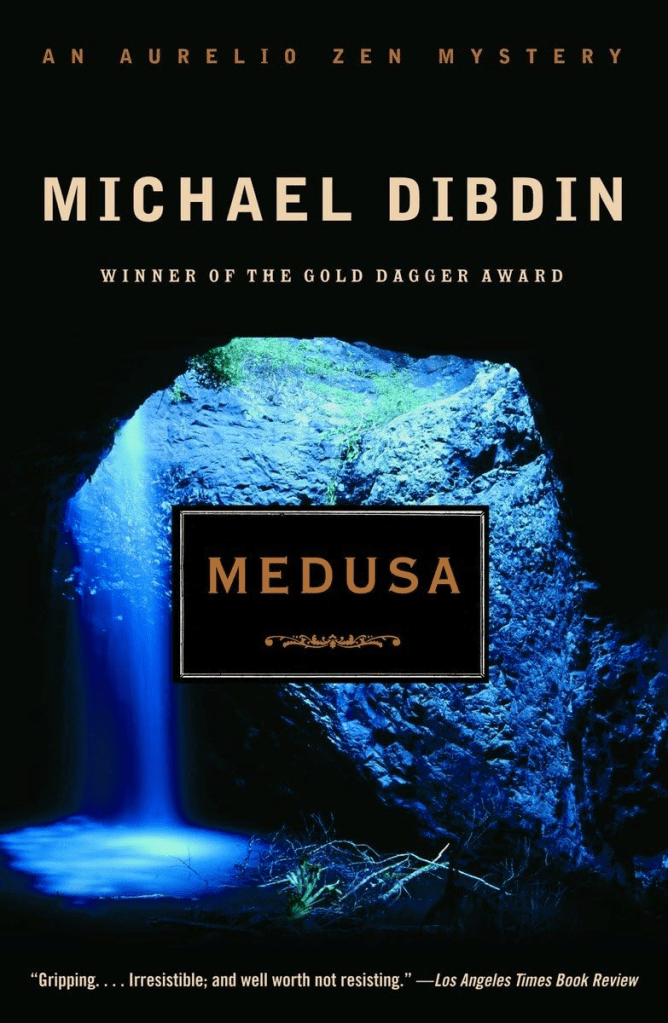
And this circles back around to techno-thrillers. A while ago I started the novel Medusa by Michael Dibdin, which I did not finish. I checked it out from my local library on a whim, and when it came due I didn’t feel like renewing it or rushing through the rest of it. But one thing that really struck me about it was how much time the author spent describing the engines of the characters’ cars. I didn’t finish the book, but I doubt that all of these character’s car engines will be relevant to the story.
But I also don’t think that Dibdin needs to slouch for time. I didn’t enjoy Medusa very much, but it’s the 9th novel in its series of detective novels and I really don’t think that Dibdin needs to stall for time.
And that brings me to the last use of random technical detail: some people use heavy technical detail because it’s an expected part of the genre. When Dibdin tells me that so-and-so has an engine with some-such liters of displacement, he is establishing his credibility as a real man’s man who knows a thing or two about cars. And maybe those technical details even provide some characterization.
And this is true for MacLean as well. When he spends paragraphs and paragraphs talking about the arming switches for nuclear devices that will never matter to his story, he is telling the audience that he knows about nuclear bombs and that he is all about technical details and that this is that kind of story.
And as science fiction writers, this is definitely something that can be exploited. Because if I start talking about radiator sizes, that buys me credibility with a certain technical crowd. It also awakens a fire in them, to prove me wrong and show with pages and pages of calculations that I’m peddling nonsense and that I don’t know what I’m talking about. So there’s certainly a balance to be found there.
 J. E. Landau
Leave a comment