Recently, I’ve been reading a bit of old philosophy. I checked out Boethius’s Consolation of Philosophy and I thought that a lot of it was pretty interesting. But one thing that I thought was also interesting about it was how it could be treated as a response to later philosophy.
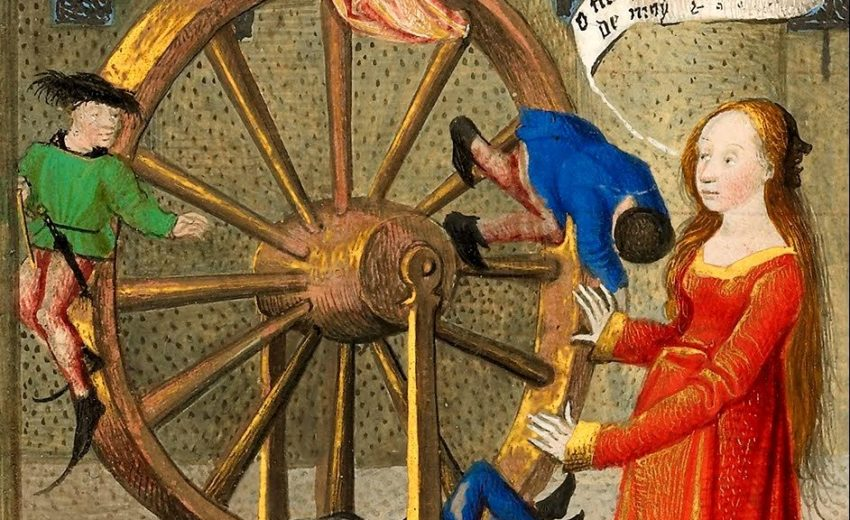
Obviously, Boethius’s writing doesn’t make references to these later texts, but the themes covered are the same. For example, Boethius discusses at length what is good to take pleasure in (and he decides that worldly things are not worthwhile), which is a common preoccupation of philosophy that has been covered up until the present day. For example, while Boethius was likely reacting to his present tradition of philosophers, we could instead frame him as reacting to later writers. What if this was a reaction to John Adams’s famous quote: “I must study politics and war, that our sons may have liberty to study mathematics and philosophy. Our sons ought to study mathematics and philosophy, geography, natural history and naval architecture, navigation, commerce and agriculture in order to give their children a right to study painting, poetry, music, architecture, statuary, tapestry and porcelain,” which argues that people should focus on gradually improving things on Earth through hard work.
Boethius, for his part, makes the argument that “if thou esteem not thyself favoured by Fortune in that thy then seeming prosperity hath departed, deem not thyself wretched, since what thou now believest to be calamitous passeth also… Thinkest thou there is any stability in human affairs, when man himself vanishes away in the swift course of time?” This is a direct rebuttal to Adams’s belief that great things can be built on Earth.
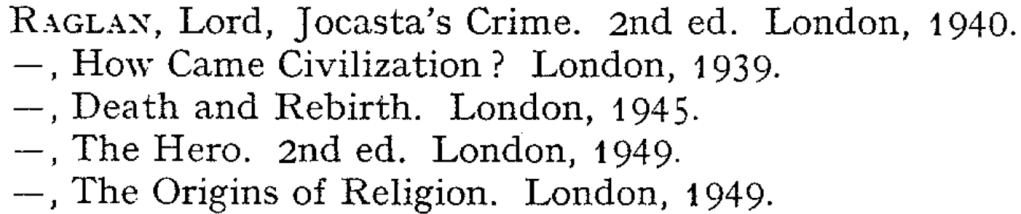
Alternatively, I’d like to imagine some kind of retrocausality of scientific papers. If you read any scientific paper, for example, Seidenberg’s The Ritual Origin of Counting, you will find that it references other papers: the first references I see are from Lord Raglan, G. Frege, and B. Russell, and if I want I can go look up those papers. But what if they didn’t exist? What if we once again ran things backwards, and instead imagine that every paper that references a given paper was written without its sources existing. So, if The Ritual Origin of Counting references Raglan’s 1939 paper, How Came Civilization?, that doesn’t mean that this paper existed in 1960. Instead, other papers were written between 1960 and in 1939 referencing this nonexistent paper by Raglan (presumably FitzRoy Somerset), and then 21 years earlier in 1939, Raglan only had to consult the papers that would be written about his own paper later, to determine what to write when he finally created his own piece.
Similarly, every respectable piece of science gets to take inspiration from the papers that will cite it, as long as it does end up being cited, up until some sort of ur-paper in the far future that synthesizes all knowledge together. Then, we can imagine that as the process of writing papers proceeds backwards through time, scientific fashions change. What was later thought of as discredited comes into fashion. We see a regression from some kind of futuristic quantum-computational analytical chemistry into modern experimental chemistry, then the earlier foundations of chemical science, then alchemy, and then the ancient thought of philosophers like Aristotle and the creators of wuxing.
If you want to be charitable to these ancient thinkers, you could argue that this is in some ways a refinement and a turn towards the spiritual, but in truth I do not think that one can defend the mercury-sulfur theory of matter as being a spiritual refinement on modern chemistry, especially when the philosophers that actually practiced it were very concerned with physically refining lead into silver and gold.
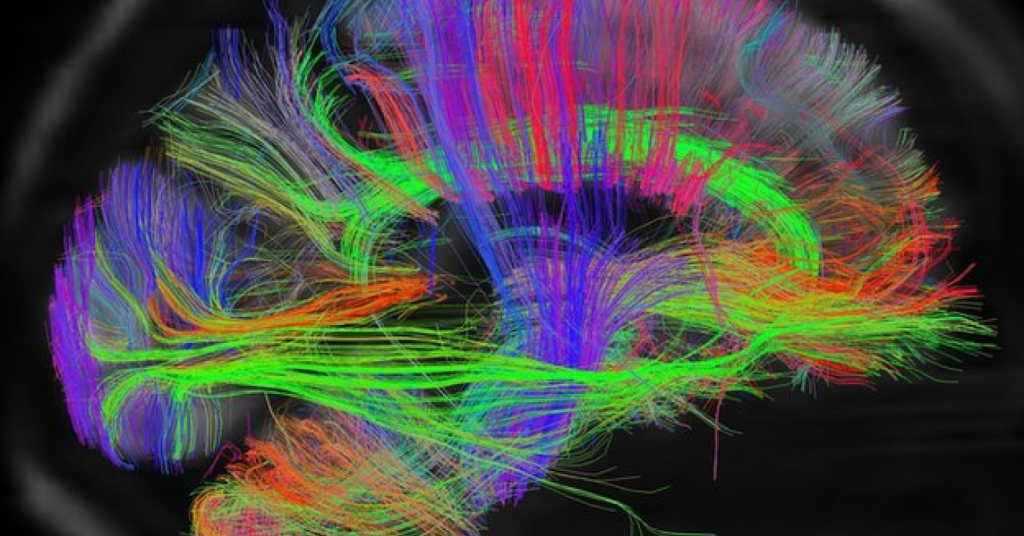
Instead, if we want to treat these scientific developments as progress instead of regress, it might be more helpful to think of them as over-analytical convolutions of the original ideas. Alchemy isn’t a spiritual simplification of chemistry, it’s another, metaphorical layer on top of it. When one turns lead into gold with mercury, this might actually be using “mercury” and “sulfur” as protons and neutrons, and through some kind of immensely tortured analysis, the alchemical processes that are described in medieval treatises become atomic transmutations. Similarly, medical pseudosciences like phrenology and humoral theory could also become metaphors for connectomics and modern medicine in this lens of analysis.
Alternatively, you could instead imagine some sort of prolonged confusion and madness, where each paper misunderstands and deranges the ideas of the papers that came after it—sometimes after being prompted by later papers.
For example, the famous “salmon MRI” study, Neural Correlates of Interspecies Perspective Taking in the Post-Mortem Atlantic Salmon: An Argument For Proper Multiple Comparisons Correction might have inflicted errors on earlier papers by pointing them out, even to the point of forcing 79% of earlier scientists to fail to use multiple comparisons correction when presenting at a study, in response to the paper’s predictions. Things get even stranger when we consider re-running earlier experiments, which might, for example, force some percentage of earlier authors to produce studies that were not reproduced later. Similarly, in the case of the Sokal Affair, we might imagine that Sokal’s infamous paper helped produce the concept of the morphogenetic field, which was then propagated to earlier new-age thinkers.
Of course, we need not confine this mode of analysis only to scientific writing. In literature, we can see that writers react to future authors. The modern era of writing was clearly an attempt to impose order on disordered postmodern literature, and then the romantic era of literature wanted to expand on these future, modernist narratives with traditionalist values and greater bombast, and so on. In science fiction, my main field of interest, we can see these trends very clearly if we look at a multi-era anthology, such as Masterpieces (edited by Orson Scott Card).
There, George R. R. Martin’s dark, moody, and depraved Sandkings is reacted to with the similarly dark, but less dramatic Eurema’s Dam by R. A. Lafferty. After all, the protagonists are quite similar, both powerful people who take revenge, but Martin’s protagonist, who is unambiguously evil, is replaced by a more sympathetic figure in Lafferty’s earlier story, representing a change in styles as we move into the past. Then, we get an even more sympathetic follow-up in the form of Poul Anderson’s Call Me Joe, which also has a protagonist rejected by society and taking anti-social actions against it, but with a protagonist who is much more sympathetic than even Lafferty’s relatively understandable protagonist. As these authors responded to their successors, they simplified their moralities and plots, and focused more on technology, drilling down into the nature of science fiction, all collected in a single anthology (which, coming after all of these stories, might have been their true genesis, and the copyright table at the front of the book may have forced the authors to produce them in exactly the right years, and the publishers to release them.)
If we ask why such a thing happens, the answer is obvious. Future citations have to correspond to their antecedents, so any publication that is remembered at all by history exists to fulfill the citations of future writers. Then, the causes that these events have radiate backwards in time. Poul Anderson wrote Call Me Joe because the Avatar movies were based on it half a century later, and any personal motivation he had to write the story that he did was merely a pre-consequence of the fact that he wrote the story.
Similarly, when movies are made, we start with the last entry in a series. Reboots imply the existence of the worn-out late-franchise sequels that came before them, which imply the original good movies and then their artistic inspirations. The Matrix: Resurrections is the true cause of The Matrix: Revolutions, which obviously cause The Matrix: Reloaded, which in turn necessitated The Matrix, which then drove the various artistic motivations that inspired the Wachowskis, who in turn necessitated their parents, who necessitated their parents, and so on.
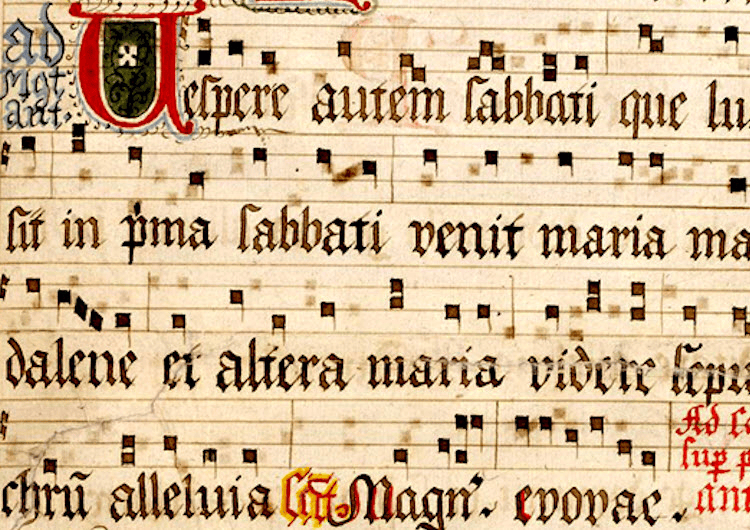
Music, too, can be seen this way. Today, we have a million genres spawned from rock music, and we can trace them back, pushing death metal, power metal, and progressive metal into just “heavy metal”, a response synthesizing our diverse contemporary musical landscape. Hardcore punk and post-punk, too, were synthesized into punk, and then punk and metal and all the other rock-like genres came together, and in an incredible blending, were combined into rock, which then diverged into blues and folk and country, which themselves were previously synthesized into even earlier genres. And, of course, looking back we can see that people of past eras clearly took example from the people of present times. In medieval musical notation, it is common to see songs with hundreds of beats per minute, echoing extratone and speedcore in Gregorian chanting.
When Michelangelo sculpted David, his main references must have been, of course, the many future versions of the image, including its prominence in vaporwave aesthetics and the millions of tourist photos taken of it. After all, the statue’s shape had to match the pictures of the statue, and so Michelangelo only needed to look at these references to find the shape it would take on.
In a way, a world analyzed backwards is one that seems to be heavily driven by fashions and trends in different fields. It was thought by many ancient people that society was continually degrading, an idea that was reflected in Hindu cosmology as the Kali Yuga, but which was also covered by the ancient Greeks and many pre-modern Christian groups, and this can be seen as a fashion that was arrived at by careful millennia of contemplation, starting with our current ideology of progress. All the scientific retro-reactions that we get by examining the academic geneaologies of papers are the result of their own fashions: 19th Century “scientific” racism, proceeded by 18th Century Enlightenment rationalism, preceded by 17th Century early Modern thought, and so on, and since the number of paper decreases as we move into the past (due to the lower population) we can imagine that these past papers are a sort of coagulation of the previous ones. Fields that might have attracted thousands of specialists in the 20th Century might have been the province of a handful of aristocrats’ speculation in the 17th, and if we trace history back even more radically we approach the dawn of recorded history: the earliest civilizations along river valleys in Eurasia.

There, in Ur, or Catalhoyuk, or Jebel Irhoud, we can imagine some very early humans, anatomically and psychologically modern, with all of our mental tools, and all of the world’s science, culture, and music combined and synthesized down to the earliest languages, earliest ideas about how to interpret the world. The ancient worldview of the Babylonians was in fact created by our 20th century hermeneutics and religious studies, and Ted Chiang’s Tower of Babylon was simplified when they were designing their picture of the heavens. The ancient Egyptian gods were created by the mummy movies of today.
One interesting phenomenon, which I have heard discussed by several of my Russian teachers, and which my investigations seem to support, is that languages spoken in more recent times a e simpler than those spoken in the ancient past. One of the linguists I discussed this with noted, that although ancient languages are more complex, it is not clear where that original complexity came from. Retro-analysis makes this clear: ancient languages are more complex because they were developed by adding features to modern languages, by separating transculturated linguistics, and by dividing linguistic groups ever more finely. Our modern English implies the Norman, Saxon, Roman, and Indo-European invasions of various regions of the globe, and as those invasions were reversed, moving backwards in time, languages naturally became more complex and local.
Obviously, the past is not privileged. Everything that we believe is the mere antecedent of future ideas, which necessitate our ideas in ways that we have not yet imagined, but which are historically obvious, in retrospect.
 J. E. Landau
Leave a comment